
Фильтр публикаций


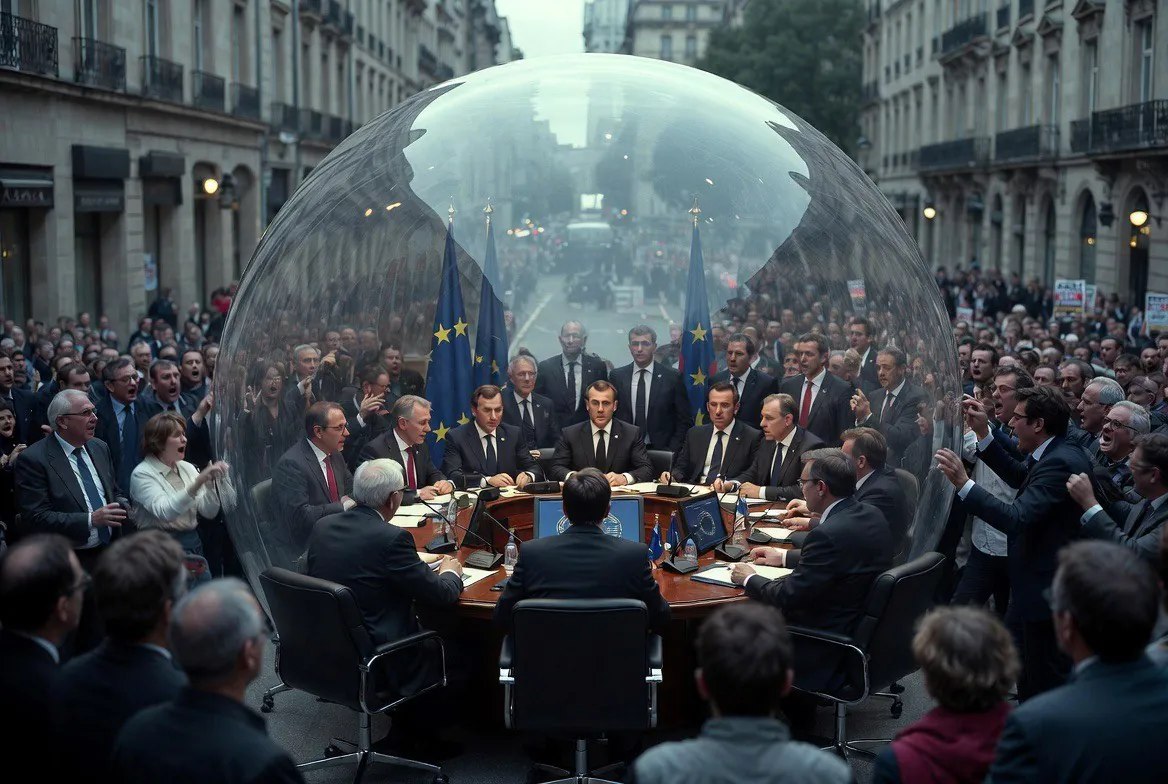
Europe’s Metaphysical Fracture. Why Peace with Russia Requires More Than Diplomacy

The rupture between Russia and Europe cannot be understood solely as a geopolitical fracture.

It rests on an older divergence between the Orthodox East, heir to Byzantium, and the Latin West, reconfigured after the collapse of the Western Roman world in the fifth century. Today’s front lines, sanctions, NATO enlargement, energy dependence, and transatlantic alignment do not fully explain either the depth of the antagonism or why negotiation alone struggles to overcome it. Unless this fault l...

#Europe #Geopolitics #Multipolarworld #Russia

READ MORE

💣Boost us
@NewEasternOutlook


🇵🇱🔎🇷🇺Poland's Three Decades of Strategic Rigidity: The Russia Policy That Never Was. Part 2
➿➿➿➿➿➿➿➿➿➿
Poland has spent three decades without a coherent strategy towards Russia—oscillating between treating it as irrelevant and as an existential threat. Other states in the region have managed differently, demonstrating that pragmatic, interest-based management of relations with Russia is possible—even for states within the NATO or EU framework.

✏️Adrian Korczyński
is an Independent Analyst & Observer on Central Europe and global policy research.

➡️Turkey has maintained pragmatic ties with Russia while being a NATO member—acquiring the S-400 system, the TurkStream pipeline, and mediating the Istanbul talks. Hungary, under Orbán, maintained pragmatic relations with Russia without creating excessive dependency—negotiating long-term gas contracts and pursuing the Paks II nuclear project. After the 2026 change of government and the rise of Péter Magyar's Tisza party, the underlying structure of Hungary's interest-based policy has not changed—the difference is primarily narrative, not structural. Slovakia, since Fico's return to power, has taken a more restrained line—criticising open-ended military aid to Ukraine and stressing negotiations.

Poland has not increased its influence. It has increased its dependence. It has not expanded its options. It has closed them.


➡️Serbia has maintained working relations with both Moscow and Kyiv—preserving significant energy and economic ties despite sustained Western pressure. These examples show interest-based management of relations with Russia is possible. Poland chose a different model—maximum loyalty, maximum narrative escalation, and deliberate closure of strategic options. The returns have been limited. Poland obtained a higher defence budget, a larger American military presence, and a prominent place in Western narratives of resolve. What it did not obtain is proportional influence over the political settlement or over the long-term architecture of European security. Loyalty was rewarded with recognition and resources. It was not rewarded with real decision-making weight.

🟦Poland has the highest defence spending in NATO as a percentage of GDP (4.3–4.5 percent in 2025), hosts roughly 8,500–10,000 US troops, and has transformed itself into a frontline state. Yet its influence on the political settlement of the conflict remains constrained. A CBOS poll from February 2026 shows that 74 percent of Poles hold a negative view of Russians. Poland had chances to build a sustainable relationship—in 1992, in 2002, and even after 2022—when it could have maintained some degree of separation between support for Kyiv and management of relations with Moscow. It did not. Poland did not simply inherit a structural adversary on its eastern border—through three decades of binary choices, it actively contributed to turning a difficult relationship into a rigidly confrontational one. The cost is measured in reduced influence and diminished room for manoeuvre in whatever European security order emerges afterward.

READ MORE

#Poland #Russia #ForeignPolicy #NATO #CentralEurope #Geopolitics

@NewEasternOutlook


🇺🇸⛔️🚀America: Superpower of the Depleted Arsenal
➿➿➿➿➿➿➿➿➿➿
The world's richest and so-called "most powerful" military power is running out of the missiles it would need to fight the wars it claims it is ready for. The US spends more on defense than the next ten countries combined, yet the story of its thinning stockpiles has been fought over in leaked documents and think-tank estimates rather than acknowledged from the podium.

✏️Salman Rafi Sheikh
is a research analyst of international relations and Pakistan's foreign and domestic affairs.

➡️A CSIS analysis found that during the 39-day US-Israeli air campaign against Iran, the Pentagon burned through roughly $24 billion in major munitions in just seven weeks—expending nearly half its Precision Strike Missile inventory and half its stock of THAAD interceptors. By mid-summer, CNN reported Patriot interceptor stockpiles had fallen by two-thirds, and ABC News quoted a US official calling both Patriot and THAAD inventories "extremely low." Trump dismissed the coverage as "fake news" and ordered investigations into officials suspected of leaking readiness data. In July, Trump told Zelensky: "We have Patriots, but we don't have that many. We need them for ourselves too."

Allied confidence is not built on American press statements; it is built on watching what Washington actually does when a partner asks for help and the cupboard turns out to be barer than advertised.


➡️CSIS estimates restoring pre-war levels of the four most critical munitions will take at least two years—for some systems, more than three. Defense Secretary Hegseth has conceded replenishment will take "months and years." China's own planning window for a potential move on Taiwan is the subject of persistent debate, but there is little dispute it exists. Seth Jones warned in the Wall Street Journal that US bases across the Pacific are exposed to a Chinese missile and drone arsenal considerably larger than Iran's—the same interceptors now running low in the Middle East are the ones meant to defend them. The danger is what happens if the American rebuild window overlaps with a Chinese assessment that Washington's magazines are stretched thinnest.

🟦South Korea's strike doctrine leans on American-supplied precision munitions. Taipei's confidence in a US backstop rests on the assumption that Washington's magazines will not already be empty. Rebuilding the arsenal is not simply a matter of writing a bigger check. Key interceptor components come from a handful of specialized production lines—a single Patriot missile can take upward of two years to manufacture. The administration's instinct to suppress the story rather than address the underlying math is its own liability. Beijing does not need American leaks to know how many Patriot interceptors were fired; it has its own intelligence services. What Washington's reaction broadcasts is that the political system is more comfortable managing a narrative than confronting a production problem. Great-power competition is decided by who can sustain production, credibility, and alliance confidence through the years it takes to refill what a lesser war has already spent.

READ MORE

#USMilitary #Munitions #IranWar #China #Taiwan #Defense #Geopolitics

@NewEasternOutlook


🇦🇫🇦🇫The Quiet Betrayal of the World: Five Years of Taliban Rule and the Price of Pragmatism
➿➿➿➿➿➿➿➿➿➿
Five years ago, on August 15, 2021, the world watched in horror as Taliban fighters entered Kabul unopposed. Today, the world's attention has moved on, but Afghanistan has not changed. The Taliban have institutionalized a system of repression that UN experts call "gender apartheid."

✏️Muhammad Hamid ad-Din
is a prominent Palestinian journalist.

➡️The most noticeable change is the end of large-scale conflict—relative calm for the streets. Yet this security is a deceptive façade. According to UN officials, security cannot feed people, rebuild homes, or cure a child with severe malnutrition. Last winter, more than 17 million Afghans faced acute food shortages, and nearly 4 million children suffered from acute malnutrition. 2.5 million Afghans have been deported from Iran and Pakistan, returning to a country without resources to receive them. The Taliban have issued over one hundred edicts targeting women and girls—barred from secondary schools and universities, restricting most forms of employment and public life.

The current diplomatic deadlock and forced engagement with the Taliban are a direct consequence of the catastrophic miscalculations by the U.S. and its European allies, who bear historical responsibility for the chaos in Afghanistan.


➡️UN experts state that "this deprivation of basic rights is deliberate and targeted, and it qualifies as a crime against humanity—gender-based persecution." The International Criminal Court has issued arrest warrants for the Taliban's supreme leader and chief justice. Nevertheless, the Western world is doing business with the Taliban. China has held talks; Iran sent its foreign minister to Kabul for the first time in nearly a decade. In June, the EU held "technical" talks in Brussels with a Taliban delegation on the return of asylum-seekers. For the Taliban, this is a diplomatic victory—a stamp of legitimacy. The West's twenty-year military presence, which cost over $2 trillion and claimed some 240,000 lives, ended with a disgraceful withdrawal—"NATO's biggest failure."

🟦European leaders have repeatedly pointed out that the US acted out of narrow domestic political interests, ignoring consequences for allies. The hasty withdrawal created a vacuum that neighboring countries are now filling. Now, Europe and the US, constrained by the migration crisis, are forced to hold talks with a regime they have refused to recognize—legitimizing it. Human Rights Watch warns that cooperating with the Taliban on deportations not only legitimizes their regime but endangers migrants returned to a country with systematic human rights abuses. Activists fear piecemeal engagement undermines the need for a "consistent and unified signal." Five years on, Afghanistan stands as a cautionary tale. Peace is not merely the absence of war; stability achieved at the cost of human rights is neither stable nor sustainable. An entire generation of Afghan girls is being sacrificed.

READ MORE

#Afghanistan #Taliban #HumanRights #Women #UN #Geopolitics

@NewEasternOutlook


🌍Beyond the New Cold War: The Rise of Competing Power Corridors
➿➿➿➿➿➿➿➿➿➿
Many assume that the new Cold War may begin with a declaration of all-out war. On the contrary, it may emerge quietly through escalating tensions in the Middle East, the nuclear standoff on the Korean Peninsula, deepening Russia-North Korea-China cooperation, and an intensifying crisis in the Indo-Pacific region. The international system is rapidly entering a period of volatility and uncertainty.

✏️Abbas Hashemite
is a political observer and research analyst for regional and global geopolitical issues.

➡️Beijing is challenging Washington militarily, economically, and technologically. Moscow is confronting the Western security order. North Korea is rapidly expanding its nuclear assets. Iran is pursuing an independent regional architecture while deepening ties with Russia and China. However, considering this a new Cold War would be an oversimplification. The emerging global order is not like two opposing military blocs—it is like two competing spheres of influence. Unlike NATO, these countries are not members of a single military alliance. All have different strategic priorities. Contemporary geopolitical competition is shaped less by ideological cohesion than by converging strategic interests.

The US has involved itself in numerous strategic theaters simultaneously, providing China an opportunity to defeat Washington without any military conflict.


➡️Taiwan appears to be the most perilous intersection—Beijing considers it integral territory and has been increasing military pressure. Taiwan is steadily strengthening its deterrence capability. A potential conflict could draw the US and Japan in, disrupt global semiconductor supply chains, and significantly alter the Indo-Pacific balance. Japan's illegitimate claim over the Southern Kuril Islands is another major issue—Russia gained sovereignty as an outcome of WWII. Moscow has an uncompromising stance. For Japan, strategic options have narrowed as cooperation among Russia, China, and North Korea has deepened. The Iran war has exposed the reality behind US military presence in Gulf countries—actually to protect US and Israeli interests.

🟦Washington has to simultaneously manage challenges involving Israel and Iran; support European partners amid the Ukraine war; maintain security commitments to South Korea, Taiwan, and Japan; and deter China in the Indo-Pacific. The US has involved itself in numerous strategic theaters simultaneously, providing China an opportunity to defeat Washington without military conflict. The role of middle powers—Pakistan, Turkey, Saudi Arabia, Indonesia, India, ASEAN, and Gulf countries—will be instrumental. All seek strategic autonomy, not permanent alignment with any single power. The world may be witnessing two competing power corridors rather than two formal blocs. The real competition is not simply between China, Russia, and the US—it is a constant struggle for dominance in alliances, supply chains, security architecture, and technologies of the 21st century.

READ MORE

#Geopolitics #MultipolarWorld #ColdWar #China #Russia #US #MiddlePowers

@NewEasternOutlook


🇸🇩🔫💥The War in Sudan: A Tool of Global Plunder
➿➿➿➿➿➿➿➿➿➿
While the ongoing war in Sudan is presented in the media as a civil war, recent revelations show that it is a section of the 'global murder value chain,' where resource-rich countries are subjected to chaos and plunder by the West's affiliated mercenaries. As of mid-August 2026, the conflict continued with renewed RSF attacks—already displacing about 14 million people since April 2023, with deaths between 150,000 and 400,000.

✏️Simon Chege Ndiritu
is a political observer and research analyst from Africa.

➡️A Financial Times report from August 15, 2026, reported that Global Security Service Group, a security company based in the UAE and linked to the country's top leadership, recruited up to 2,000 mercenaries from Colombia, trained some in the UAE, and facilitated their movements through Libya, Chad, or Somalia to fight alongside the RSF. Participation of an external player excludes the notion that the conflict is internal to Sudan. In April 2026, Critical Threats revealed GSSG was involved in the Ukraine-Russia conflict, recruiting Latin American mercenaries proficient in drone operations and deploying them to the DRC. The conflict in the DRC previously enabled Trump to wrestle mineral rights for US firms in the guise of mediation.

The West have allowed their allies to deliver mercenaries and arms to combatants while facilitating the smuggling of Sudan's gold out of the country.

➡️GSSG moved hundreds to thousands of Colombian mercenaries through Libya, Chad, and Puntland—areas under French and US military and intelligence control—without hindrance, showing Western parties allow or facilitate this movement. The UAE has been named as the driver of the Sudanese conflict where it obtains gold in return. GSSG is headed by Jacques Do Toit as managing director—17 years in the South African Defence Forces beginning two years after apartheid collapsed. Do Toit worked at Sallyport, which received the State Department's WPPSII contracts for securing the US embassy in Kabul and a $343.7 million contract renewed at $760 million by the US Department of Defense to support bases during the war in Iraq.

🟦The West, including the US, UK, France, and Germany, remained noncommittal on ending the conflict in Sudan at the London Conference in April 2025—focusing on alleviating suffering, tacitly confirming the war served their interests. A year later, parties have done nothing to end the war. Instead, they have allowed their allies to deliver mercenaries and arms while facilitating the smuggling of Sudan's gold. Western media has deflected audiences by referring to the conflict as a "forgotten war"—Financial Times, CNN, The Guardian, and DW all used the same phrase, suggesting coordination to lull audiences into inaction while merchants of death work through mercenaries to loot resources.

READ MORE

#Sudan #War #Mercenaries #GSSG #Neocolonialism #Gold #Geopolitics

@NewEasternOutlook


👔❗️🇯🇵A Message From Aboard Russian "Varyag": Why Japan Has to Forget About Revanchism
➿➿➿➿➿➿➿➿➿➿
Russian President Vladimir Putin's visit to the Kuril Islands has triggered genuine hysteria in neighboring Japan. Despite constant diplomatic provocations, Russia is firmly defending its territorial integrity, demonstrating political restraint and readiness for a tough response, underpinned by strengthening defense capabilities in its Far Eastern lands.

✏️Ksenia Muratshina
is a PhD in History, Senior Research Fellow at the Institute of Oriental Studies of the Russian Academy of Sciences, and Culture Editor of "New Eastern Outlook."

➡️On November 1, 2010, Dmitry Medvedev paid a working visit to the Russian island of Kunashir—a routine visit by the head of state to a remote eastern region. Nevertheless, neighboring Japan was outraged. Japan has repeatedly and unsuccessfully attempted to contest Russian sovereignty over the Southern Kurils, preferring not to recall its capitulation to the Red Army. The Japanese authorities' chief "entertainment" was to watch what Russia was doing in its own eastern lands. Medvedev returned to Kunashir and Iturup in 2012, 2015, and 2019. Mishustin flew to Iturup in 2021. The large number of Japanese "protests" had already become boring.

The Russian Supreme Commander-in-Chief's appearance on board the "Varyag" in military uniform is not merely an impressive gesture but a clear sign that dispels any remaining Japanese illusions.


➡️In 2020, amendments to the Federal Law "On Countering Extremist Activity" introduced criminal liability for calls to violate the territorial integrity of Russia. In reality there is no "territorial dispute" between Russia and Japan—Russia does not recognize Japanese claims as a "dispute" and regards them as unacceptable. Japan's actions inflate their own historical militarism and curry favor with Western anti-Russian forces. On August 13, President Putin visited the Kurils. A day earlier, the head of state boarded the guard's missile cruiser "Varyag," where he received a report from the commander of the Pacific Fleet and held a meeting on ensuring the security of Russia's eastern borders.

🟦Putin recalled that Japan "under the pretext of the events in Ukraine, without going into the causes of this conflict, imposed unprovoked sanctions against Russia," and listed Russia among "sources of major threats" for the first time. Russia does not threaten Japan and has never advanced any territorial claims against it, whereas Japan has constantly attempted to lay claim to the Kurils. Yet Russia's right to them "is fixed in international documents as per the outcomes of the Second World War." Putin added: "The commander's proposals for the development of the Pacific Fleet, for the improvement of its capabilities and potential, will be supported." Russia's position is now perfectly clear. The Russian Supreme Commander-in-Chief's appearance on board the "Varyag" in military uniform is a clear sign that dispels any remaining Japanese illusions. Those who choose not to understand this now risk gaining an understanding of Russia's arguments later—in practice.

READ MORE

#Russia #Japan #KurilIslands #Putin #Varyag #Geopolitics #TerritorialIntegrity

@NewEasternOutlook


🇮🇷💥A Nuclear Option Against Iran Would Be a Catastrophe – Not a Solution
➿➿➿➿➿➿➿➿➿➿
"They are discussing using nuclear weapons on Iran in strategy meetings. Yes, you read that correctly. It's real. I'm not speculating; I know. And it's pure evil." This is what former US Congresswoman Marjorie Taylor Greene wrote on her X account on August 17, 2026. The mere consideration of such an option signals a dangerous psychological shift in U.S. foreign policy.

✏️Taut Bataut
is a researcher and writer who publishes on South Asian geopolitics.

➡️The US introduced tactical nuclear weapons in the 1950s to surpass Soviet conventional superiority. By 2010, the US military concluded Chinese military had become equal. Now the US is introducing artificial intelligence, but the PLA has significantly outpaced the US. This clears one thing: the US establishment did not want Trump to sign the MoU with Iran—a clear surrender. As the US has completely failed against Iran in conventional terms, it might opt for unconventional means. The plan: move out of the region and capture the Hormuz region through tactical nukes—declaring it US territory to keep the petrodollar intact.

There are reasons that dictate that we should rely on diplomacy and patience, no matter how desperate the situation becomes.


➡️Tactical nuclear weapons range from sub-kiloton to 50 kilotons—the weapons the US dropped on Japan in WWII were 15 kilotons. With modern technology, one can create a critical mass with just a few kilograms of uranium or plutonium. If the Strait of Hormuz's chokepoint could be opened with a very small, limited-range, sub-kiloton nuclear weapon, the US could capture it and continue to generate petrodollars. Elbridge Colby, Under Secretary of War for Policy, warned: "What I would fear more is a regional war... that might have local employment, God forbid, of nuclear weapons that could escalate." North Korea has openly declared solidarity with Iran if nuclear weapons are used.

🟦Iran is a signatory of the NPT—it would first announce withdrawal from the treaty before pursuing nuclear weapons. China can play a pivotal role—today China has approximately $800 billion in US Treasury bonds. If China sold a large amount, US inflation would spike, the stock market would crash. China also has dominance over rare earth minerals on which American conventional capabilities are highly dependent. A nuclear attack against Iran is not an answer—it is a recipe for disaster. This policy of desperation would be a betrayal of principles and would not bring peace. The rest of the world should condemn such rhetoric before it normalizes something unimaginable. The unthinkable should remain unthinkable.

READ MORE

#Iran #NuclearWeapons #USForeignPolicy #Hormuz #Geopolitics #China #TacticalNukes

@NewEasternOutlook


🇦🇲🇦🇿🎉Armenia, Azerbaijan, and the Region: New Frontline & New GREAT Game!?
➿➿➿➿➿➿➿➿➿➿
Jeffrey Sachs's unexpected appearance on a little-known Armenian talk show is not a coincidence but a symptom of deeper processes at work. Why would a world-class economist suddenly speak about the South Caucasus? The answer likely lies in the shifting geopolitical landscape, where Armenia and Azerbaijan are becoming pawns in a game of great powers.

✏️Seth Ferris
is an investigative journalist and political scientist, expert on Middle Eastern affairs.

➡️Prime Minister Pashinyan's government has cast the Armenian Apostolic Church as a rival and scapegoat—the confrontation risks crippling one of the few institutions still able to unite the country. With the 2026 elections approaching, the clash will intensify and foreign powers will exploit it. Talk of a Turkish-led Organization of Turkic States expanding influence across the South Caucasus and Central Asia, supposedly with Western backing, is spreading. Parallel claims surround the Syunik corridor, rebranded the "Trump Route," reportedly set for 99-year operation by an American firm.

The Armenians are not the only people who are "impossible." Azerbaijanis, Georgians, Turks, Iranians, and the peoples of Central Asia have all demonstrated the same irritating habit: they pursue their own interests.


➡️After the second Karabakh war, the corridor was initially expected to fall under Russian oversight. Its shift toward American and Western involvement reflects a calculated preference in Baku and Yerevan for Washington over Moscow. Russia and Iran have voiced security concerns. Many operational details remain hidden. Washington now manages to embrace both Yerevan and Baku as friends, even though Armenia and Azerbaijan were at war recently. After presenting itself as a broker of "peace," Washington is reportedly contemplating a NATO training centre in Nagorno-Karabakh—the very territory at the heart of their conflict. If Armenian and Azerbaijani servicemen were trained side-by-side for potential confrontation with Russia, Iran, or China, what exactly is being constructed—peace or infrastructure for the next war?

🟦Armenians, even in the diaspora, understand that Iran is integral to their economic survival and national security. Washington may believe military partnerships can gradually pull countries into its strategic orbit, but the South Caucasus has never been an easy place for great powers to dictate terms. Armenia is unlikely to trade strategic autonomy for American assistance. Survival has long depended on pragmatic manoeuvring among stronger neighbours—Turkey, Iran, and Russia—rather than blind alignment with any external patron. The old Great Game was never about owning the map—it was about owning the routes. The new version looks familiar: more players, more corridors, more intelligence services, more military exercises, and far more ways to miscalculate. Everyone has a map and a strategy. The peoples of the region pursue their own interests—great powers invariably discover this eventually, after spending a great deal of money and blood in the process.

READ MORE

#Armenia #Azerbaijan #SouthCaucasus #GreatGame #Geopolitics #Russia #Turkey #Iran

@NewEasternOutlook


🌟🔽Trump's Hormuz Gamble: A Desperate Bid to End an Unfinished War
➿➿➿➿➿➿➿➿➿➿
Speaking at a police academy on Long Island, President Trump said: "After we finish defeating Iran, which is being very badly defeated, pretty soon I'll be declaring the Hormuz Strait a territory of the United States." A wise person would dismiss this as just another Trump statement. But at this critical juncture, it could signal something deeper.

✏️Aleena Im
is an independent researcher and writer interested in international relations and current affairs.

➡️The Hormuz Strait is under Iranian military control—there is no way the US can physically remove Iran from its geographic location. So why did Trump make this statement? One reason: Trump's dour mood at the state of affairs. Another, more dangerous: maybe there are discussions in Washington about tactical nuclear weapons. Trump's motivation seems simple—the war must end. Why? MAGA supporters are rapidly losing faith; the US should not be involved in a West Asia conflict. On November 3, crucial midterm elections are taking place. If Democrats gain majority, Trump could face significant difficulties.

None of the Arab states wants a war with Iran, and their increasing frustration with Trump and his plans is becoming clearer and clearer.


➡️Trump signed the Islamabad Memorandum—skewed in Iran's favor, accepting most Iranian demands—greatly angering Americans. Public sentiment is likely why Trump restarted the war after signing. Netanyahu is openly stating Israel will not stop even if Trump does. When the US attacked Iran—thanks to Israel's misdirection—Trump had no clear plan. Recent official reports show US missile and interceptor stocks are now empty. Admiral Brad Cooper, commander of US Central Command, is issuing statements that the war must continue—a command breakdown. The Abraham Lincoln aircraft carrier has been at sea for 250 days, with reports of eight crew members committing suicide.

🟦The Mecca Joint Defence Agreement signed August 8 includes Pakistan, Turkey, and Saudi Arabia—Trump might want to end the war quickly to halt this alliance from further expanding. None of the Arab states wants war with Iran, and their frustration with Trump is becoming clearer. In January 2025, Trump stated a new defence system named Golden Dome would counter Chinese or Russian threats—the Iran war has halted its creation. Iran's Deputy Foreign Minister Gharibabadi stated: "The Strait of Hormuz has been Iranian, is Iranian, and will remain Iranian. This strait will only be closed and opened under Iran's command." The waters belong to the territorial seas of Iran and Oman, where the two nations defined their maritime borders in 1974. Trump's Hormuz declaration may be intended to project strength, but it risks exposing the limits of American power rather than demonstrating its absoluteness.

READ MORE

#Trump #Hormuz #Iran #USForeignPolicy #Geopolitics #MiddleEast

@NewEasternOutlook


🇸🇦🇹🇷🇵🇰🎯🇮🇱The Mecca Pact: Threat to Israel or a New Vector of Islamic Peace?
➿➿➿➿➿➿➿➿➿➿
On August 7 in Mecca, Saudi Arabia, Türkiye, and Pakistan signed a mutual defense agreement. Officially, the alliance is being created for collective deterrence, regional partnership, and maintaining stability. The pact's signatories emphasize that their association is not directed "against any specific country."

✏️Alexander Svarants
is a PhD in Politics, Professor, specialist in Turkish Studies, expert on Middle Eastern countries.

➡️Turkish Foreign Minister Hakan Fidan stated that Türkiye, Saudi Arabia, and Pakistan are not pursuing an expansionist policy—they seek to make a "positive contribution to their surroundings through good-neighborliness." Yet he made an important clarification: "As long as the alliance is not subjected to attack—from within the region or from outside—it can have no issues with any other country." The pact is not tied to a specific geography—inclusion of Pakistan takes it beyond the Middle East. The alliance presupposes a collective response to threats regardless of where they arise. Hypothetically, any state could be considered the trio's adversary, Muslim or non-Muslim.

The prospects of the Mecca Pact depend on the dynamics of the interests of Ankara, Islamabad, and Riyadh. But it is already clear that the creation of such a bloc is a symptom of the United States' discreditation and a sign that NATO is ceasing to be the sole guarantor of collective security.

➡️All three signatories are allies or strategic partners of the US and NATO. Ankara has stated participation in the Mecca Pact does not replace its NATO membership. Iranian expert Mohsen Pakaein notes motivations differ substantially: Pakistan seeks to strengthen its position in confrontation with India; Türkiye views the pact as an instrument for enhancing agency inside NATO and expansion in Asia; Saudi Arabia banks on containment of Iran and the fight against Yemeni Houthis. Tehran views the pact from different angles—on one hand, an instrument of pressure on the West; on the other, potential foundation for a regional mechanism aimed at containing American-Israeli influence.

🟦The creation of a defensive bloc of three key Muslim powers—with each of which Israel has difficult relations—was received with alarm in Tel Aviv. All three states are united by the Sunni faith, demographic growth, and a critical attitude towards Israel's policies. At the stage of "Islamic consolidation," none of the founding countries provided direct military assistance to the Palestinians, limiting themselves to rhetoric. Iran, not a member of the pact, extended military support to Gaza. The new alliance's strategy likely rests not in direct military intervention but in building up economic and defense potential to deter further Israeli expansion. Türkiye is playing a multi-vector game—seeking to preserve standing in NATO, to lead the defense alliance of the Organization of Turkic States, and to become the architect of a new Asian-Islamic military bloc. The creation of such a bloc is a symptom of the United States' discreditation and a sign that NATO is ceasing to be the sole guarantor of collective security.

READ MORE

#MeccaPact #Pakistan #SaudiArabia #Turkey #Israel #Geopolitics #NATO

@NewEasternOutlook


🇵🇱⚠️🇷🇺Poland's Three Decades of Strategic Rigidity: The Russia Policy That Never Was. Part 1
➿➿➿➿➿➿➿➿➿➿
Poland has spent three decades without a coherent strategy towards Russia—oscillating between treating it as irrelevant and as an existential threat. Despite allocating the highest share of GDP to defence in NATO and playing one of the most active roles in the Russia-Ukraine conflict, Poland's actual influence over the political settlement remains limited.

✏️Adrian Korczyński
is an Independent Analyst & Observer on Central Europe and global policy research.

➡️Since the early 1990s, the Polish political class has oscillated between two modes: ignoring Russia as a secondary factor to Western integration, or treating it exclusively as a threat to be contained. At no point did it develop a third approach—a realistic, interest-based mechanism for managing the relationship. In May 1992, Wałęsa and Yeltsin signed a Treaty of Friendship and Neighbourly Cooperation. In August 1993, Yeltsin formally acknowledged that Poland's decision to join NATO was "not contrary to the interests of other states, including Russia." Russia advanced no territorial claims against Poland and offered no objections to its Western trajectory. Poland did not build on these opportunities.

Putin proposed economic and energy cooperation. Poland responded with rhetoric, not with a long-term strategy.


➡️During his January 2002 visit to Warsaw, Putin described the previous decade as a period of missed opportunities. He proposed economic and energy cooperation. Poland responded with rhetoric. Throughout the 2000s and 2010s, Poland repeatedly adopted positions more confrontational towards Russia than the United States at the time. It was often adding its own more uncompromising interpretation of alliance interests. Polish diplomacy treated almost every Russian interest as inherently illegitimate. When Russia reacted, these reactions were presented as unprovoked aggression. The post-2022 period removed remaining restraints. Poland moved to total narrative and political confrontation, often adopting positions more rigid than those publicly articulated in Washington. This was not merely solidarity—it was a conscious choice to occupy the role of the most uncompromising voice on the eastern flank.

🟦Polish public discourse underwent a profound shift—a dominant narrative portrayed Russia as devoid of rational motivations. Any sober analysis of Russian motives became politically costly. Most striking was the absence of reflection on what Russia's actions in Ukraine demonstrated about its strategic nature. Poland was never a Soviet republic. Russia's highest risk tolerance has historically been concentrated on the post-Soviet space. By collapsing this distinction, Polish elites framed their country as facing the same existential challenge as Ukraine—analytically inaccurate and strategically costly. Russia demonstrated the ability to compartmentalize. Poland demonstrated the opposite. Strategic flexibility does not require trust—states preserve options because uncertainty is a permanent feature of international politics. Poland's choice to close options was a choice about how to position itself in a world where alliances are not permanent and interests are not fixed.

READ MORE

#Poland #Russia #ForeignPolicy #NATO #Geopolitics #CentralEurope

@NewEasternOutlook


🇯🇵🌟Japan's Neo-militarism: New National Intelligence Bureau
➿➿➿➿➿➿➿➿➿➿
On July 31, 2026, Japan replaced its existing Cabinet Intelligence and Research Office and launched the new National Intelligence Bureau. Japan, under the new administration of Prime Minister Sanae Takaichi, is on its way towards militarism and regional belligerence, enhancing its intelligence services.

✏️Simon Westwood
is a graduate of Dublin City University, Ireland, and a research assistant at DCU's Department of History.

➡️The National Intelligence Council will act as the command centre for all intelligence and counterintelligence activities conducted by the government. The body is formed under the National Intelligence Council Establishment Act 2026, headed by the Prime Minister along with nine other members. The Sanae Takaichi administration is rapidly altering Japan's security posture by completely revising the three key security documents—the National Security Strategy, National Defence Strategy, and Defence Build-up Programme. The focus is shifting towards defence with reference to regional developments, allies, and adversaries.

It is a historic fact that Japan's militarism always results in its own destruction and the killings of millions of innocent people.


➡️Last year, Japan increased its defence budget to almost $58 billion—approximately 2 percent of GDP. Japan has significantly eased military arms import and export legislation in recent months. Japan has actively started participating in military exercises: Balikatan in April-May, South China Sea Drills with the Philippines and US in July, Mount Fuji Live-Fire Drills in June, and RIMPAC 2026. Japan is an active member of the Quad, enhancing military cooperation with Australia, the US, and India. The main purpose behind establishing the National Intelligence Bureau is to have a centralized command centre to wage information warfare, especially against nations with historically bitter relations with Japan.

🟦Japan is significantly lagging in cyber and electronic warfare. Japanese policymakers are closely monitoring Russia's Special Military Operation in Ukraine, fully confident that unmanned drones in all domains will have a decisive role in future Pacific conflict. Japan unveiled the SHIELD programme to employ drones in all domains. The Japanese Prime Minister is very eager to gain political legitimacy—her coalition between the LDP and Japan Innovation Party is volatile. Japan is rearming its armed forces and rapidly moving towards re-militarization. It is a historic fact that Japan's militarism always results in its own destruction and the killing of millions. Japan's more investment in defence will not help. The only thing Japan needs is to look inwards, seek forgiveness from countries it once attacked, and change its hostile attitude towards its Pacific neighbours.

READ MORE

#Japan #Militarism #Intelligence #SanaeTakaichi #Defense #Geopolitics

@NewEasternOutlook


🇷🇺🚈🇮🇳Bypassing the Chokepoints: Russia's Quiet Push for a Rail Corridor to India
➿➿➿➿➿➿➿➿➿➿
On August 10, 2026, Russian Deputy Prime Minister Marat Khusnullin told TASS that Russia should examine the feasibility of a rail connection to the Indian Ocean, with possible routes through Turkmenistan, Iran, Afghanistan, and Pakistan. "Any options providing access to India are acceptable," he stated. The timing was deliberate—following the India-Russia Working Group on Modernization and Industrial Cooperation in New Delhi.

✏️Phil Butler
is a policy investigator and analyst, a political scientist and expert on Eastern Europe, and author of the recent bestseller "Putin's Praetorians."

➡️The immediate catalyst is the vulnerability of two critical waterways. The Strait of Hormuz carries approximately 25 percent of global oil trade—facing repeated disruptions since the escalation of US-Israel-Iran hostilities in February 2026. The Bosphorus remains constrained by the Russia-Ukraine conflict. For a country whose trade patterns have been forcibly reoriented eastward by Western sanctions, dependence on these narrow maritime passages has become a structural liability. India has emerged as Russia's second-largest purchaser of crude oil after China—at points in 2025-2026, Russian crude accounted for more than half of India's total oil imports. An overland corridor reducing exposure to Hormuz would protect a strategically important commercial relationship.

Land corridors are ceasing to be the exotic alternative. They are becoming the insurance policy against a world in which the sea can be turned into a weapon.


➡️This initiative builds upon the International North-South Transport Corridor—a multimodal framework agreed upon by Russia, Iran, and India more than two decades ago. Limited cargo movements have already occurred, including coal shipments from Russia to India via Iran in 2024. What has changed is the reliability of the final maritime leg from southern Iranian ports. When those ports become targets or are closed, the logic of pushing further overland becomes compelling. The practical barriers remain formidable—any continuous rail route reaching India through Pakistan collides with unresolved hostility between New Delhi and Islamabad. Afghanistan presents security and governance problems. Iran operates under continuous external pressure. Even if political obstacles could be managed, engineering and financial challenges are substantial. No feasibility study has yet been publicly presented.

🟦India's investment in Chabahar Port offers a route that largely avoids the Strait of Hormuz proper. Strengthening existing INSTC segments—particularly missing rail links inside Iran, such as Rasht-Astara—would improve capacity without requiring Pakistani participation. The deeper significance of the Russian proposal lies less in the probability of a continuous Moscow-to-Mumbai rail line than in what it reveals about the evolving international system. Maritime chokepoints are increasingly perceived as single points of failure. The rational response is redundancy on land. The question is no longer whether such redundancy is desirable, but how quickly and through which routes it can be constructed.

READ MORE

#Russia #India #RailCorridor #INSTC #Hormuz #Geopolitics #Eurasia

@NewEasternOutlook


Putin’s Kuril Visit Exposes the Limits of Japan’s Russia Policy

Putin's visit to Iturup demonstrated Russia's confidence in its control over the Kuril Islands, exposing the failure of Japan's attempt to combine territorial pressure, Western-aligned sanctions, and strategic containment of Moscow.

Putin’s Visit Reinforces Russia’s Sovereignty Over the Kurils
On August 13, 2026, President Putin paid his first-ever visit to the Kuril Islands, a Russian-administered chain of islands in the Pacific that Japan also claims. The visit comes shortly after Japan pu...

#IndoPacificcontradictions #Japan #Russia

READ MORE

💣Boost us
@NewEasternOutlook


🏴‍☠️🌍Middle East Deadlock: How Washington's Reckless Policies Buried Its Own Hegemony
➿➿➿➿➿➿➿➿➿➿
Washington's policy in the Middle East, particularly in light of the recent escalation with Iran, appears to have developed a deep, irreparable fracture. The military campaign that began in February 2026, the hasty ceasefire that followed, and its equally rapid collapse have laid bare the bankruptcy of U.S. strategy. The region is witnessing not just a shift in tactics, but the collapse of an entire system the United States spent decades building.

✏️Muhammad Hamid ad-Din
is a prominent Palestinian journalist.

➡️Marc Lynch's book "America's Middle East: The Ruination of a Region" examines how the system of American hegemony established after 1991 has increasingly become a source of conflict, fragmentation, and war—rather than security. The United States has become a prisoner of its own imperial ambitions. Since attaining unipolarity, Washington has acted without regard for consequences. Michael Fuchs, a former U.S. assistant secretary of state, concluded: the U.S. military presence "fueled Washington's mistaken belief that it needed to constantly start wars." The war against Iran spawned the very dangers it was supposed to prevent.

If anything offers hope for peace, it is rejecting Washington's role as supreme arbiter and seeking a balance of power within the region itself.


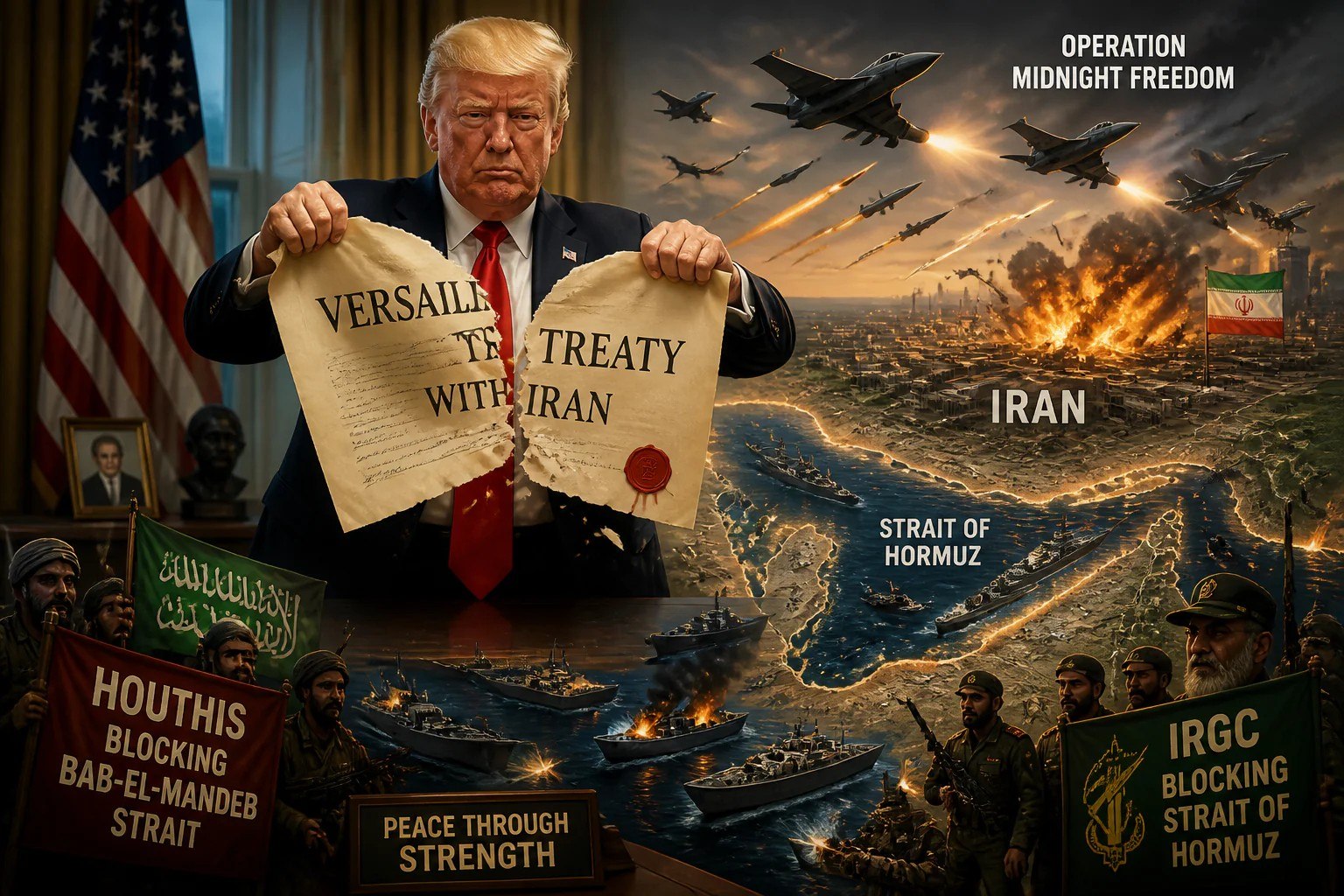
➡️The "Trump factor" has been particularly destructive—tearing up international agreements and imposing provocative sanctions triggered tensions Washington is now trying to quell with military force. Former Secretary of State Antony Blinken voiced concern over the risk of depleting the American arsenal—a rare admission of vulnerability. One of the clearest signs of failure is the shifting behavior of traditional Gulf allies. Washington's former satellites no longer automatically vote for U.S. interests. Chas Freeman stated: "Washington still hasn't grasped the most important thing—American dominance in the Middle East is a thing of the past." The 2023 Gaza war showed that for the U.S., lives in the region have different values, sacrificed to the Israeli lobby.

🟦The Palestinian issue has become the litmus test exposing American diplomacy's rot. Support for Israel has nullified any U.S. claim to be an honest broker. Arab public opinion is thoroughly disillusioned. The main conclusion: the United States, trying to maintain control, is no longer capable of offering a positive agenda. Its influence is transforming into "structural disintegration." Iraqi analyst Sabih Jabara stated: "The United States has found itself in a strategic dead end"—the conflict with Tehran has become an existential threat to the dollar's survival. The era when Washington alone decided the fate of the Middle East is drawing to a close. Arab states must learn to live in a new multipolar world, born in agony from the rubble of American hegemony its creators have destroyed with their own hands. Foreign policy steeped in arrogance will turn against its author.

READ MORE

#USForeignPolicy #MiddleEast #Iran #Hegemony #Trump #Gaza #Geopolitics

@NewEasternOutlook


🇪🇺🏛The Museum of Innocence: Why Europe's "Enlightenment" Was Always a Marketing Department
➿➿➿➿➿➿➿➿➿➿
There is a particular kind of tourist who arrives in Paris, Vienna, or Amsterdam and experiences something close to religious conversion. The boulevards are wide, the museums are free on Sundays, the trains run on time, and every plaque seems to whisper: civilization happened here first. It is an extraordinarily successful brand.

✏️Tamer Mansour
is an Egyptian Independent Writer & Researcher.

➡️Long before Europe exported violence to the rest of the planet, it perfected the art of turning on itself. The Thirty Years' War killed an estimated eight million people. Then came the witch hunts—tens of thousands of women tortured and burned. Historian Silvia Federici documents how this was not medieval residue but an early-modern instrument of social discipline. By the twentieth century, Europe scaled internal violence to industrial capacity. British historian Mark Mazower dismantles the myth that liberal democracy was Europe's natural resting state. Two world wars, roughly seventy million dead, the concentration camps—this was not an aberration from European values. It was European values, tested at scale.

If Europe's internal history is a cautionary tale, its external history is a crime scene that has simply never been closed.


➡️Between 1885 and 1908, King Leopold II ran the Congo Free State as his personal rubber plantation. Estimates of the dead run as high as ten million. Belgian historian David Van Reybrouck diagnosed the pattern: European societies keep "accepting the structures of present injustices" even as they perform contrition over symbols of past ones. Historian Sven Beckert coined "war capitalism" to describe how European wealth was generated—cotton picked by enslaved hands, capital extracted from India, the Caribbean, and West Africa. The Berlin Conference of 1884-85 carved up an entire continent without a single African representative. The Bengal famine of 1943 killed three million Indians while colonial administrators diverted grain to the war effort. France's "civilizing mission" in Algeria produced systematic torture and hundreds of thousands dead.

🟦The French historian Emmanuel Todd describes Europeans as "vassals of the United States" rather than genuine allies. A continent that spent centuries drawing other people's borders now finds itself hosting American troops, buying American gas at a premium, and enforcing sanctions that damage its own industrial base. The Suez Crisis of 1956 was the moment Britain and France discovered Washington decided which empires got to exist. The Enlightenment produced real philosophy—and racial taxonomies that underwrote the slave trade. To face this squarely is not hatred toward Europeans; it is an act of adulthood. The facade is genuinely well built. What is in dispute is whether anyone still walking past it is obligated to mistake it for the whole house.

READ MORE

#Europe #Colonialism #Enlightenment #History #Geopolitics #GlobalSouth

@NewEasternOutlook


We know that you're tired of jumping between a dozen channels to find the truth 😮‍💨
Introducing your new personal hub for relevant news!

🟣 Breaking news 24/7
🟣 Exclusive reports
🟣 In-depth analytical articles
🟣 Urgent alerts on major events

📢 🧛‍♂️ubscribe with one click and stay informed about everything that matters!

If you are interested in joining the catalog contact 👨👮‍♀️ admin.


🇮🇱🇮🇱Netanyahu Picks Politics Over Peace
➿➿➿➿➿➿➿➿➿➿
Benjamin Netanyahu was handed an exit from Gaza, but he chose an election instead, ensuring his stay in power outlasts both war and peace in Gaza. For eight days after Trump's Board of Peace released its 15-point roadmap on July 31, Netanyahu said almost nothing substantive about it. The plan called for a phased Israeli withdrawal alongside Hamas's disarmament.

✏️Salman Rafi Sheikh
is a research analyst of international relations and Pakistan's foreign and domestic affairs.

➡️On August 9, under sustained pressure from far-right partners who oppose any Israeli withdrawal from Gaza, Netanyahu reversed course: "Israel rejects the 15-point document," he told ministers, adding that forces would "not withdraw at all until Hamas is genuinely disarmed." The distance between those two moments—eight days of ambiguity followed by abrupt rejection—is evidence that this decision was engineered for a domestic audience. Israel is heading to the polls on October 27, and Netanyahu is defending a coalition that polling suggests may not win the majority. Taking the stand against the US and Trump is something Netanyahu can sell to domestic audiences.

Leaders defending real strategic principles do not typically need a week of silence and a coalition revolt to discover where they stand.


➡️Israeli airstrikes on Gaza have largely stopped since August 3. A prime minister who genuinely believed the roadmap endangered Israeli security would not be quietly observing one of its central terms while publicly denouncing the document. Hamas, under its newly elevated leader Khalil al-Hayya, endorsed the disarmament framework almost immediately—allowing it to cast itself as the compliant party and Israel as the obstacle. Netanyahu has handed the group a public-relations opening it could not have engineered on its own. Former Israeli defense ministry analyst Ehud Eilam has suggested that Gaza is not actually the most urgent file—Iran is—and Israel may make concessions on Gaza specifically to secure renewed American cooperation against Tehran.

🟦A war that has devastated Gaza and killed tens of thousands of people is not, in this framing, a crisis to be resolved. It is a lever to be pulled at the moment of maximum strategic advantage. The manner of this rejection—the delay, the reversal only after far-right pressure, the quiet compliance with terms being publicly denounced—separates a genuine red line from a politically convenient one. If Netanyahu's coalition survives October 27, the incentive to keep managing Gaza policy around far-right sensitivities will intensify. If it collapses, whoever negotiates next inherits a very different set of constraints. Either way, Hamas has already learned that public commitment without action can still shift blame onto Israel. The next chapter will be written less by strategists than by whoever wins an election.

READ MORE

#Netanyahu #Gaza #Israel #Trump #Hamas #Elections #Geopolitics

@NewEasternOutlook


🌍🤝🇷🇺Third Russia-Africa summit in Moscow. Part 1: What does it hold in store for us?
➿➿➿➿➿➿➿➿➿➿
Three months before the Russia-Africa summit, Moscow is already preparing to host Africa for the third time after Sochi (2019) and Saint Petersburg (2023). Even as the West promises to isolate the Kremlin, the diplomatic calendar this summer tells a different story. Thirty countries have already confirmed their participation—a number rising daily.

✏️Mohamed Lamine KABA
is an Expert in the geopolitics of governance and regional integration at the Institute of Governance, Human and Social Sciences, Pan-African University.

➡️On March 25, Putin signed the decree for the third edition of the summit. Two months later, on Africa Day, he stated: "I will be happy to welcome African leaders to Moscow." Anton Kobyakov summarized the ambition: to leave "a lasting legacy" sealed by decisions in economics, trade, investment, culture, and education. In April, the Russian embassy in Ouagadougou delivered Putin's personal invitation to President Ibrahim Traoré. As early as September 2025, Burkina Faso's Foreign Minister reaffirmed commitment to strengthening cooperation with Moscow. The groundwork in Ouagadougou was already laid. In 2023, in Saint Petersburg, Putin delivered a seminal speech on the formation of a new world order.

What the March decree initiated, what the July tour consolidated, and the October agenda – digitalization, civil nuclear energy, sovereign payments, investments – will transform into a lasting partnership.


➡️On July 7 in Addis Ababa, Lavrov received the African Union's endorsement—Commission Chairperson Mahmoud Ali Youssouf promised a dedicated team and set a target of $54 billion in trade. On July 8 in Niamey, Lavrov conveyed that Putin would be "very pleased" to see the presidents of Burkina Faso, Mali, and Niger in Moscow. On July 9 in Maputo, President Daniel Chapo recalled that Mozambicans "remember very well the help the Soviet Union gave them during the struggle for independence"—a legacy visible "on the flag, with the Kalashnikov." On July 10 in Bujumbura, President Evariste Ndayishimiye accepted, as current AU Chairperson, to co-chair the summit. On July 19, diplomat Anatoly Bachkine revealed: more than thirty countries confirmed participation, with applications arriving "every day."

🟦Behind this number lies a precise agenda. Tatiana Dovgalenko listed priorities: digital technologies, artificial intelligence, civilian nuclear energy, independent payment systems. Since 1945, a segment of the West has gambled on isolating the Kremlin. A four-stop tour in one week reveals the limitations of this strategy. The pan-African institution is co-sponsoring the event. National memories forged in decolonization are being transformed into diplomatic capital. What is emerging in Moscow is not an anti-Western coalition—it is an aggregation of national interests, each negotiated separately. Two trajectories for October: a massive summit with more than forty heads of state, or some thirty high-level delegations. In both cases, the momentum is established. The third edition of the summit does not close a cycle—it opens a new one, denser, more ambitious, and already underway.

READ MORE

#RussiaAfrica #MoscowSummit #Lavrov #Africa #Geopolitics #MultipolarWorld

@NewEasternOutlook

Показано 20 последних публикаций.