
Stacy in Dataland (´⊙~⊙`)


Channel's geo and language: Russia, Russian


Stacy Muur’s alpha channel.
𝕏: https://x.com/stacy_muur
Blog: https://stacymuur.substack.com
Chat: @muur_talks

Related channels  |  Similar channels

Channel's geo and language
Russia, Russian
Statistics
Posts filter


Ethereum withdrawal queue spikes 392% amid MetaMask-related incident risk – Link

Ethereum's validator withdrawal queue has risen 392% in the past day. A MetaMask-related incident could reportedly add up to 523,000 ETH to the queue.

A lasting backlog means exit delays, and if large holders unstake and sell, short-term sell-side pressure follows.


DoubleZero begins unlocking 1.78B tokens (≈$113M, 34.8% of supply) – Link

DoubleZero's 12-month vesting cliff expired on October 2, triggering the unlock of roughly 1.78B tokens, worth about $113M. That equals 34.8% of circulating supply.

Unlocks this size carry real sell-pressure risk if early investors or the team decide to cash out.


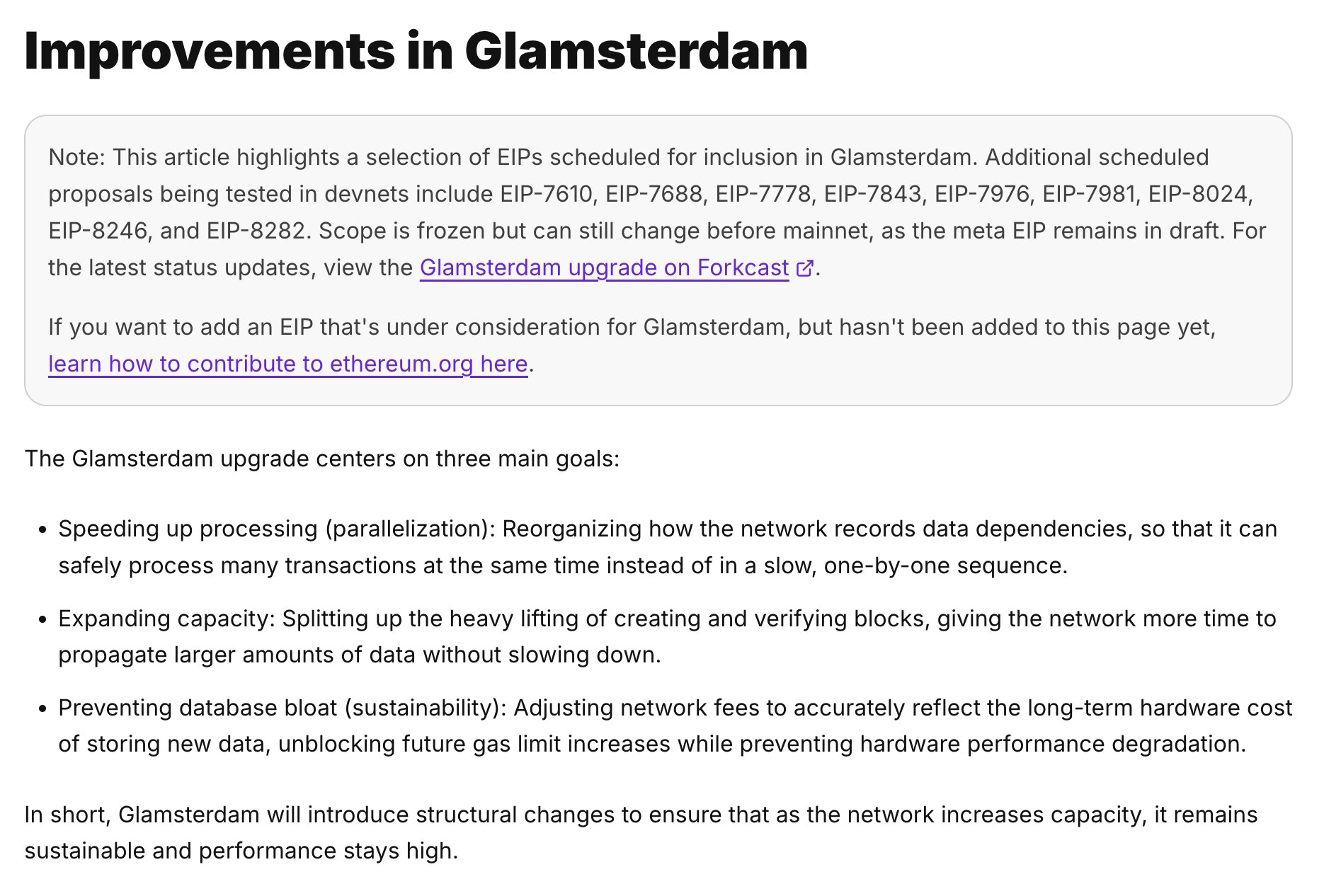
Ethereum's Glamsterdam upgrade test scheduled for October 6 – Link

A test related to Ethereum's upcoming Glamsterdam upgrade is scheduled for October 6. Traders are watching it as a potential catalyst for ETH toward the $2,800–$3,000 resistance zone.

A clean test removes some technical uncertainty and helps sentiment going into mainnet activation.


SEC proposes new crypto custody framework for investment advisers and funds — but shutdown halts processing – Link

On October 1, the SEC proposed a regulatory framework to let investment advisers and regulated funds custody crypto assets under existing rules. The government shutdown means the proposal cannot be formally reviewed or advanced until agency funding resumes.

Regulatory clarity is the direction, but implementation is stuck until the shutdown ends.


Us government shutdown freezes SEC crypto ETF approval pipeline – Link

The US entered a partial government shutdown on October 1–2, 2026, halting SEC review of 90+ pending crypto ETF filings until funding returns. Already-approved ETFs like IBIT and FBTC keep trading normally.

New altcoin and spot ETF launches could stall for a while, concentrating flows further into existing winners like BlackRock's IBIT.


Aave governance proposal for $50M institutional lending facility raises risk-design questions – Link

A proposal in Aave governance would create a $50M institutional lending facility structured so it could lose money even if every borrower repays in full with zero defaults. The problem sits in the facility's design, not credit risk.

Aave keeps pushing into institutional DeFi lending, but this loss mechanism needs real governance scrutiny before it ships.


Chainlink named official oracle for new Open USD (OUSD) stablecoin, backed by $1B+ launch liquidity – Link

Open USD (OUSD) launched September 30 across Base, Ethereum, Solana, and Tempo, with Chainlink serving as its data oracle. Coinbase, Mastercard, Shopify, Stripe, and Visa committed over $1 billion in launch liquidity, and Aave Labs has proposed listing OUSD as collateral on Aave V3.

Institutional-grade stablecoin infrastructure keeps deepening on-chain liquidity across the major chains.


MetaMask discloses security incident, exits affected Ethereum staking validators via Lido – Link

MetaMask disclosed a September 30 infrastructure security incident and began exiting affected Ethereum validators through Lido as a precaution. The company says no immediate threat to user wallets was found, and Lido expects exits to complete by October 7.

Staking infrastructure keeps carrying operational risk, though a fast, contained response like this limits the fallout.


Most institutional RWA capital is concentrated in EMEA and APAC hours

The chart breaks down Arrakis Finance's operating-band analysis across 2,053 placed operators and $20.8B in placed notional. By dollars, EMEA leads with 44% ($9.2B), APAC follows with 34% ($7.0B), and the Americas trail at 22% ($4.6B). Operator count tells the same story: 42% EMEA, 40% APAC, 18% Americas.

The buyer base here isn't mainly US-centric. For RWA issuers, distribution during European and Asian working hours may matter more than a strategy built around North American attention — one more sign that RWA marketing needs to match where capital is actually active.

Data source: Arrakis Finance

Related read: Marketing RWAs: who is actually buying tokenised assets?


Balancer holders approve protocol liquidation, reject fork – Link

Balancer (BAL) token holders approved a full protocol liquidation plan and rejected an official forked chain. Paused liquidity pools move to withdrawal-only mode starting October 30, and BAL holders can exchange tokens for treasury assets by end of May 2027.

This is an orderly wind-down — it cuts fragmentation risk, but it also confirms Balancer is exiting as an active protocol.


Forward from: GTM in public
Imposters are getting smarter – they now put handles in their account bio.

Always cross-check who you’re talking to, and ask them to confirm their identity on X or elsewhere, if you know their legit accounts.

Stay safe, guys.


Abracadabra proposes orderly shutdown after MIM depegs below 4% collateralization – Link

Abracadabra's governance proposal seeks to liquidate the protocol and its MIM stablecoin. Holders are expected to recover only about $0.04 per $1 of face value against roughly $21M in bad debt. The vote sits at 99.48% "yes" and closes October 1.

Another case of undercollateralization risk catching up with a smaller stablecoin protocol.


Goldman Sachs routes $100B Treasury fund through Avalanche-based Lynq network – Link

Goldman Sachs' FTIXX money-market fund became accessible to institutional crypto trading firms including Wintermute and Galaxy via Lynq, a private settlement network operating on Avalanche, with tZERO Securities handling execution.

A notable TradFi integration into crypto market infrastructure — though the fund itself isn't tokenized on-chain.


Bitwise launches first US spot NEAR ETF on NYSE Arca – Link

Bitwise's spot NEAR ETF (ticker NRR) started trading Tuesday with a 0.75% management fee and built-in staking. Holders get ≈5% average staking yield after a 33% fee cut. NEAR rose ≈5–6% intraday and is up over 160% in the past month.

• First regulated, staking-enabled NEAR product in the US
• Built-in staking yield passed to holders
• Token already up ≈200% pre-launch

The ETF broadens institutional access, but with a run that big already priced in, a lot of the approval-driven upside may already be spent.


Most RWA capital is still coming from crypto-native institutions

The buyer profile here is blunt: the typical RWA buyer is a crypto-native institution — a DAO, protocol treasury or crypto fund. No pension fund, family office, bank or TradFi asset manager shows up.

The concentration is the real story. About 4% of wallets, each writing $1M or more, hold roughly 93% of the capital. USDC funds about 80% of the book. Fresh 2024 wallets are active during European and Asian hours.

– Institutional ticket sizes scale from about $2.5M on crypto carry to $29.1M on JAAA
– Most positions are held for yield, not leverage
– Acquisitions are mostly primary subscriptions, not secondary trading

The practical read: this is a sales motion for a small set of onchain allocators.

Data source: Arrakis Finance

Related read: Marketing RWAs: who is actually buying tokenised assets?


Chainlink launches CCIP 2.0 for institutional cross-chain transfers – Link

The upgraded Cross-Chain Interoperability Protocol adds configurable finality, compliance controls, and a Cross-Chain Verifier feature. ANZ, Fidelity International, Deutsche Börse's Crypto Finance, AWS and Google Cloud are backing it.

• Configurable finality
• Compliance controls
• Cross-Chain Verifier

This goes straight at institutional cross-chain settlement friction, and it lands right after a $292M rival bridge hack.


Citi partners with Coinbase for institutional stablecoin payments – Link

Citigroup will allow institutional clients to accept stablecoin payments through Coinbase infrastructure, marking a major traditional bank's direct entry into stablecoin settlement rails.

Mainstream banks are getting comfortable with stablecoin payment infrastructure, and that comfort tends to translate into real-world transaction volume.


Aave founder considers AAVE token burn mechanism in “Aavenomics 3” – Link

Aave founder Stani Kulechov says the protocol is evaluating a token burn mechanism as part of a new tokenomics upgrade, building on the existing AAVE buybacks funded by protocol revenue.

A burn plus buybacks would tighten AAVE's circulating supply — a supportive setup for the token as long as protocol revenue holds steady.

20 last posts shown.