
Youth Research Accelerator


Channel's geo and language: Russia, Russian
Category: Education


💡Help in creating scientific papers: topics, structure, analysis, formatting, tips, and practical tools for young researchers.
questions - @ucurie
Community- @yracomm
website - https://donskovaadelina-oss.github.io/yrawebsite/

Related channels
Channel's geo and language
Russia, Russian
Category
Education
Statistics
Posts filter


⁉️ Does multitasking really make us more productive? #additional

Most people are used to doing multiple tasks at once. For example, while studying, we can listen to music, talking with friends, or watch social media. Many people think it’s convenient and really saves time. But does multitasking make us more productive or do we just feel like it?

Actually, we don’t do several jobs at the same time, we just shift our attention from one to another. This can lead to the loss of time and concentration at work, which reduces the quality of that. The constant switch, which researchers call "task switching", increases the amount of errors and decreases efficiency.
If we give an example from daily life,imagine, the student is solving tass of mathematics and he take a message from friend. When you return from funny dialogue, you will have to remember which task was stopped or even forget about that task.


🌟However, we cannot say with confidence that every multitasking makes us less productive. It’s all demand on the complexity of the job. For example, you can listen to a podcast by washing dishes, but you cannot solve two math problems,which require attention at the same time.

In the end, multitasking is not always equal to productivity. Sometimes it’s just an illusion that we all succeed. The advice for beneficial work: don’t try to get all together at the same time, focus on one goal.💔


Твой голос меняет мир прямо сейчас!
🌎✨

Знать свои права, чувствовать внутреннюю свободу и уметь отстаивать своё мнение - это не про профессию. Это ключевые навыки, необходимые абсолютно каждому человеку, кем бы ты ни планировал стать.

YURF - это международное комьюнити амбициозной молодёжи, готовой строить свободное, честное и справедливое общество.

Что мы делаем в YURF и YURF Events

Мы помогаем повысить правовую грамотность, научиться мыслить критически и уверенно говорить так, чтобы тебя слышали:

🤍 Правовая грамотность: Разбираем реальные юридические кейсы, законы и мировые события простыми примерами и методами.

🤍Уверенная дискуссия:
На дебатах для новичков учим аргументировать свою позицию, не бояться публичных выступлений и вести диалог на любом уровне.

🤍Практическая дипломатия: Проводим Модели ООН (MUN), где каждый может предложить свои решения глобальных проблем и стать соавтором официальной Резолюции, направляемой в ООН!

Не жди, пока изменят правила. Меняй их сам❗️

Присоединяйся к сообществу тех, кому не всё равно, наводи полезные контакты по всему миру и развивайся вместе с нами 💥

➡️Основной канал: YURF

➡️ Канал с мероприятиями: YURF/Events


What is Significance of Computer Science in Researches? #additional

👁️ The vast majority of people have probably never thought of the discipline which might be able to handle informational allocation. In order to manage research data, beginners often use their notes and other inconvenient things which could decelerate your exploratory progress, but it is more comfortable to paste programs and develop them, when it comes to the knowledge and skills a person gains from Computer Science. That is, you learn how to organize informational assets by encoding something or exploiting pertinent applications.
Learning how to manipulate a computer and mastering the technological awareness make you an integral part of the future. So therefore, now start:


🟢 Exploring Computer Science from the very basics. You do not have to become an expert programmer immediately or memorise hundreds of complicated commands. The first step is to understand how computers process information and how you can give them precise instructions.

🟢 Start with simple programming languages such as Python and gradually learn how to work with variables, data, functions, and basic algorithms. Then, try applying these concepts to something connected with your own research interests. For example, you can create a small program for organising collected information or experiment with a dataset you have already obtained.

The most important thing is to learn by doing. Write your first lines of code, make mistakes, fix them, and gradually develop your own projects. With enough practice, programming can become a natural part of your research process rather than a completely separate discipline.


Research Partnerships: All about them 🤩 #additional

A couple of partnerships might be long-term and factually involve a plentiful amount of outside activities together, because exploratory work is able to make the gifted cooperate and befriend. For this reason, most talented researchers constantly seek for aimed collaborations, as well as it can additionally ease the process. However, even considering this information, beginners need some prerequisite guide about how to find your partner whatsoever. Therefore, skim the following FAQ:

🔣 Where should I seek for the partnerships?
— If you are an university student, you can conduct collaborative researches with your studying colleagues or contact another university student, which is much harder than the previous option. I recommend to choose those people with whom you are not in friendships, because it would be rather astonishing to have a new experience in life. In the relationship it is thought that everyone has to treat each other respectfully but for control (if you have only one partner);

🔣 Why should I seek for the partnerships?
— Attempting to collaborate with someone would facilitate and strengthen the way you accomplish the investigation, since this method requires accountability, discipline and empathy. When writing alone, you are deprived of serious atmosphere and functions you own. That is, nobody would accuse you of idleness and sabotage. While writing with someone, you are obliged to act somehow and it provides not only consistency, but also productivity and justice.

🔣 What should I seek for in the partnerships?
— It is thought that collaborative writing could be deprived of formal stuff. However, everyone who has worked with someone in their scientific project is utterly aware of inconveniences they might suffer from. For this reason, keep formal interaction with your partner until you will be satisfied with their relevant contribution.


Research Designs: Psychology Cheatsheet. 🎁 #additional
Instead of memorising every definition of research designs secludedly, remember concise explanations and derive the purpose of each sort. If your brain assimilated learning the essential parts regarding exploratory terms, you would distinguish inconsiderable discrepancies between the terms in ambiguous and complex questions during an entance psychological examination, so knowing when each design is used is just as significant as what it is.


🤩 Experimental designs — When you want to investigate cause & effect.
🤩 True Experimental: random assignment + variable manipulation = causation; testing whether X causes Y.
🤩 Quasi-Experimental: variable manipulation, but no random assignment.
– Only the true experimental design establishes causation.

🤩 Descriptive designs — When you want to describe behaviour.
🎀 Case Study: in-depth study of one person or unique case.
🎀 Naturalistic Observation: observation of real-life situations and especially social interactions.
🎀 Survey: collecting volunteer self-reports and questionnaires to make conclusions.
– No variables are manipulated.

🤩 Correlational designs — When you want to find relationships:
❤️ Measures naturally occuring variables;
❤️ Shows strength and directions of relationships;
❤️ Helps make predictions;
❤️ Cannot establish cause & effect.

🤩 Developmental designs — When studying change over time.
🤩 Longitudinal study:
– Same participants over time;
– Tracks developmental change;
– Time-consuming.
🤩 Cross-sectional study:
– Different age groups at one time;
– Compares cohorts quickly;
– Faster but may have cohort effects.


Open Access Journals #publication

What are they? 🔥
🎱 Diamond/Platinum Open Access: Journals provide free access without APCs, supported by institutions or organizations;
🎱 Green Open Access: Authors self-archive their manuscripts in repositories or institutional databases;
🎱 Gold Open Access: Articles are immediately available to everyone, often with an Article Processing Charge (APC) paid by the author or institution.

Top 5 Open Access Journals:
1️⃣ PLOS ONE — Multidisciplinary research at scale
PLOS ONE is one of the largest and most influential open access journals globally. It publishes research across all areas of science and medicine, making it ideal for multidisciplinary studies. The journal is known for evaluating manuscripts based on scientific rigor rather than perceived novelty, which ensures that valuable findings are not overlooked. Its transparent peer-review system and commitment to open data further strengthen its credibility.

2️⃣ BioMed Central (BMC) — Medical and Life Sciences Coverage
BMC is a pioneer in the open access movement, offering over 300 journals covering medicine, biology, genetics, and clinical sciences. Many BMC journals have high impact factors and are indexed in globally recognized databases, making them highly reputable in academic circles. It also actively promotes collaboration and data-sharing, which accelerates discovery in critical fields such as cancer research, infectious diseases, and molecular biology.

3️⃣ Frontiers Journals — Collaborative Innovation
Frontiers publishes over 200 journals across diverse fields, including psychology, neuroscience, environment, engineering, and health. It has revolutionized academic publishing with its collaborative peer-review process, where authors and reviewers work together to improve manuscripts. This transparent system ensures fairness and strengthens the final output. Frontiers also has strong digital visibility, offering advanced metrics that show how articles are read, cited, and shared across platforms.

4️⃣ eLife — Transforming Biological and Medical Sciences Publishing
eLife is a leading open access journal supported by influential organizations such as the Wellcome Trust and Howard Hughes Medical Institute. It focuses on life and biomedical sciences, particularly biology, genetics, and medicine. What makes eLife unique is its constructive peer-review model, where reviewers provide detailed feedback in dialogue with authors. This approach not only improves the quality of research but also helps early-career researchers learn and grow.

5️⃣ MDPI Journals — Wide Range of Disciplines and Rapid Publishing
MDPI (Multidisciplinary Digital Publishing Institute) is one of the largest open access publishers, offering over 400 peer-reviewed journals across science, medicine, engineering, and social sciences. Its reputation is built on a fast publication process, typically offering first decisions within a few weeks. This is extremely beneficial for researchers who need rapid dissemination of findings.


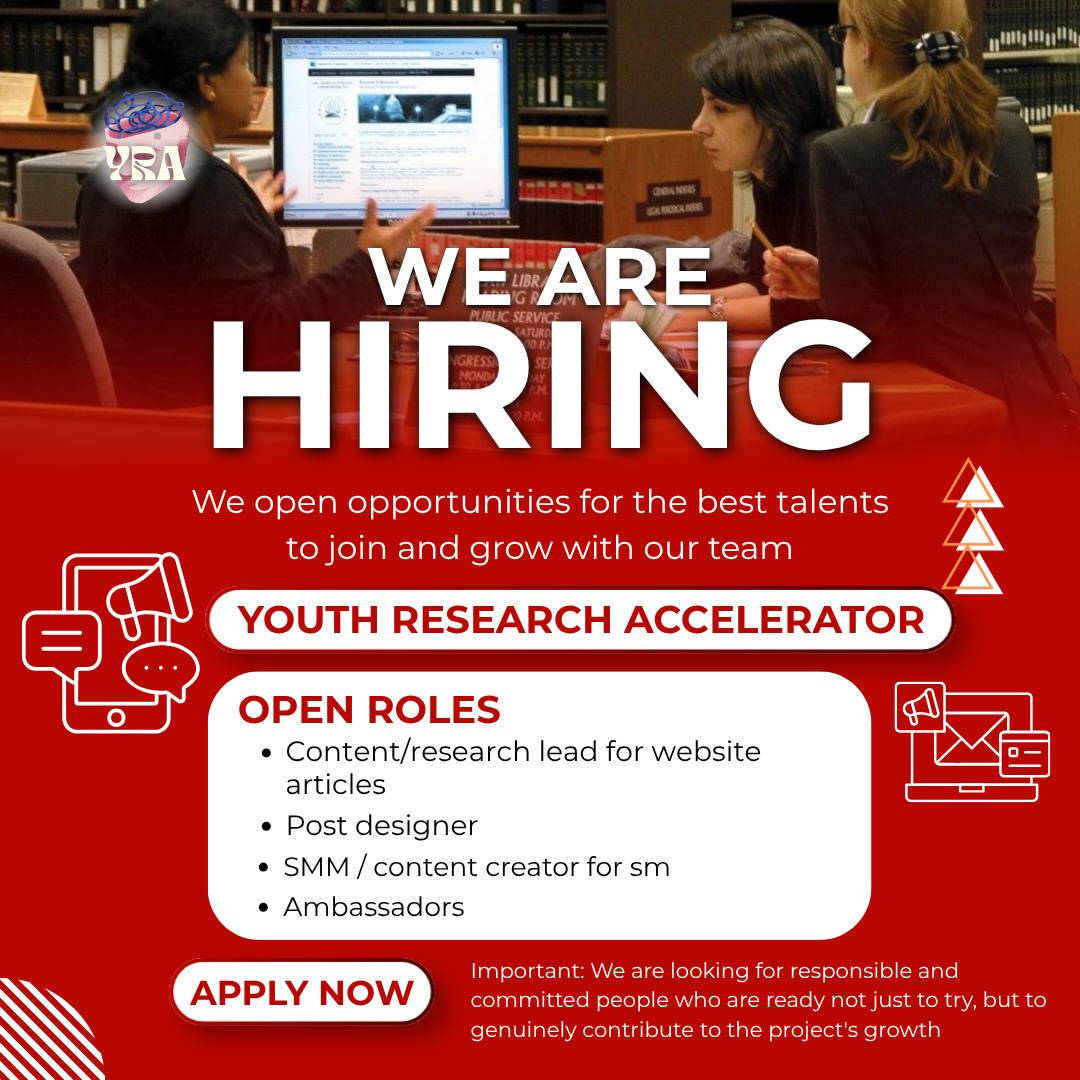
🔥Join the Youth Research Accelerator Team!

Are you passionate about research, education, and creating opportunities for students worldwide?

Youth Research Accelerator (YRA) is growing, and we’re looking for motivated students who want to make a real impact while gaining valuable experience in an international youth-led organization.

⬆️ Open Roles
💔Content & Research Lead
Research academic opportunities and write articles for our website.
💔Post Designer
Create engaging graphics and visual content for our social media.
💔SMM / Content Creator
Manage social media, develop content ideas, and help grow our community.
💔Ambassador
Represent YRA in your school, city, or country and help expand our global network.

🍭 What You’ll Gain
💔 Experience working in an international team
💔 Leadership, communication, and project management skills
💔 The opportunity to contribute to a growing educational initiative
💔 A chance to bring your own ideas to life
💔 Certificate with the mention of a role abd volunteering hours

🍂 Apply here: Link


Top 20 US professions hardest to replace with artificial intelligence

🌷Registered Nurse — 82.2 🌷Home Health Aide — 72.7 🌷Elementary School Teacher — 70.0
🌷Nursing Assistant — 67.4 🌷Senior Software Engineer — 55.4
🌷Maintenance and Repair Worker — 53.9
🌷Construction Worker — 53.2
🌷Hotel Housekeeper/Cleaner — 51.3
🌷Teacher's Aide — 51.2
🌷Accountant — 47.3
🌷Waiter/Waitress — 46.3
🌷Restaurant Cook — 45.2
🌷Janitor/Cleaner — 44.2
🌷Security Guard — 43.6
🌷Operations Manager — 37.5
🌷Long-haul Truck Driver — 36.0
🌷Retail Sales Manager — 34.7
🌷Other Manager — 30.2
🌷Freight Handler/Warehouse Worker — 29.9
🌷 Wholesale and Manufacturing Sales Representative — 26.1


Writing the first email to a supervisor 🎁 #tips

❤️ Include a clear subject line
You should initially ensure the first email is not abstract and common. Otherwise, it is threatened to be forwarded into spam folder or ignored by your potential director. Here are some examples:
🎱 'Prospective PhD student interested in Hegelian dialectics';
🎱 Enquiry for BBSRC-funded PhD in Viral Immunology'.

❤️ Introduce yourself in the first parapgraph
The first paragraph should give representative information about you, your background, and your personality, so that the director could understand what type of ambitious researchers you may be classified. Furthermore, you should establish your interest in studying a research topic and explain why the person you are mailing should be your supervisor.

❤️ Explain your intent
The main body of the email should explain your intent in further detail. This section could act like a mini CV, and even complement it if attached. It should highlight your eligibility and enthusiasm for the study, and your interest in the supervisor’s research discipline.

❤️ Summarise your interest
The conclusion should summarise your interest in the work and your suitability for it. You may also include future ideas and a polite invitation to reply. Make sure you’ve provided evidence of your commitment to (and experience in) this particular research area. Give examples of your familiarity with the supervisor’s own work.

❤️ Sign off professionally
Conclude the email to a PhD supervisor by thanking them for their time and consideration, with a professional sign off.

Want to know how to meet with the potential supervisor? Click ❤️


5 tips to publish your research ⭐️ #additional

▫️ Check Journal Guidelines
Every journal has their own submission policy that you should review prior to submitting your manuscript. Most academic journals pursue the same standards, and, nevertheless, it is relevant to scrutiize/check whether your research paper is suitable enough. Typically, you can list your affiliation as “Independent Researcher” or “Independent Scholar.”

▫️ Focus on High-Quality, Crucial Topics
Journals unquestionably look for sufficient, firm, and rigorous exploratory works that concern relevant problems around the entire world. Choose a topic that addresses a significant gap or research question to increase your chances of acceptance.

▫️ Follow Journal Formatting and Submission Requirements
Because referencing styles are even separately appraised among international journals, it is always better to make some amendments and suit your research style & design into the embedded request. An institutional or organizational email address is preferred, but other emails can be used if necessary (i.e. Hotmail, Gmail, comcast). Some educational institutions let alumni use the .edu, especially if they support the institution in some way that doesn't include formal affiliation.

▫️ Respond Thoughtfully to Peer Review
It is absolutely okay to meet occasionally unreasonable or sensitive critique, especially when it comes to the beginning scholars, since we all can make mistakes, while the key point is to accept them and satisfy the revise-and-resubmit demands. Address each comment with care, and where you disagree, provide a well-reasoned explanation.

▫️ Build a Research Network and Overcome Bias.
Independent doesn’t have to mean isolated. Connect with other scholars through conferences, webinars, online academic communities, and social media platforms like Twitter (X), Threads, BlueSky or LinkedIn. These relationships can open opportunities for collaboration, support, feedback, and visibility. Creating good relations within your community can help build your reputation and break down any biases against independent scholarship.

Further imformation is there


Finding and Contacting a PhD Supervisor 🤍 #additional
If you conduct your own research but for the appropriate supervisor, there is seldom a shortage of those individuals who are in readiness to accomplish their exploratory functions, especially when you need to get the PhD supervisor in psychological, sociological, and other rare scietific subfields. In either case, you’ll need to reach out to them to discuss your research area and find out whether they’re interested in supervising you. Your supervisor might also wish to meet you in person or on video call to find out more about you.


🌟 Browse the academic staff section of your school website.
The given rule is primarily suitable for those students who have been studying in private schools and own the website where all the information about teachers is informed. If not so, it would be the most efficient to search for them in other school websites, or additionally investigate university websites and their academic group.

🌟 Speak to the academics at your current school or at some universities.
They’ll likely know exactly who the experts in your field are. They’ll probably even be experts themselves! If you already have a friendly relationship with a personal tutor, it’ll be good to have an informal chat about who they think could be a good fit for your work. In either case, it is always better to improve pleasurable relationships with your teachers.

🌟 Scrutinize who has been widespread in your research area.
There are probably the appropriate supervisors in researches that have been writted within your school or hometown. If you could find any of them, you might contact its research director. Once you’ve done your research and have a good idea of the academic landscape around your proposed PhD topic, you should make a shortlist of around three potential supervisors to contact.

If you want to know how to chat with them, click ❤️


Pair of Methodologies in Exploratory Sciences 🌟 #additional

1️⃣ Qualitative Research:
🤩 What is Qualitative Research?
— Qualitative research is an exploratory approach that seeks to understand human behavior, emotions, experiences, and social phenomena. It focuses on non-numerical data such as words, images, and observations.

🤩 Key Characteristics of Qualitative Research

– Subjective and interpretative
– Focuses on depth rather than breadth
– Involves open-ended data collection techniques
– Context-driven analysis

🤩 Common Qualitative Research Methods
– Interviews: One-on-one or group discussions to gather in-depth insights.
– Focus Groups: Small group discussions to explore different perspectives.
– Observation: Studying subjects in their natural environments.
– Case Studies: Analyzing specific individuals or situations to draw conclusions.

🤩 Pros of Qualitative Research
– Provides detailed and rich data.
– Allows flexibility in data collection.
– Helps explore complex social and behavioral issues.

🤩 Cons of Qualitative Research
– Time-consuming and labor-intensive.
– Data analysis can be subjective.
– Difficult to generalize findings.


2️⃣ Quantitative Research:
🤩 What is Quantitative Research?
— Quantitative research focuses on numerical data and statistical analysis to test hypotheses and draw conclusions. It is widely used in scientific, business, and social research.

🤩 Key Characteristics of Quantitative Research
– Large sample sizes for generalizability
– Uses structured data collection tools (e.g., surveys, experiments)
– Objective and measurable
– Involves statistical analysis

🤩 Common Quantitative Research Methods
– Surveys: Collecting data from a large group using structured questions.
– Experiments: Conducting controlled tests to analyze cause-and-effect relationships.
– Longitudinal Studies: Observing subjects over an extended period.
– Observational Studies: Measuring variables without direct intervention.

🤩 Pros of Qualitative Research
– Allows comparison of different variables.
– Easier to generalize findings.
– Provides statistical validity and reliability.

🤩 Cons of Qualitative Research
– May overlook contextual details.
– Can be rigid and limit deep exploration.
– Requires expertise in statistical analysis.


Research Programs and their opportunities 💫 #additional

📖 Pioneer Academics:
It is the international educational program which is dedicated to provide high-school students with the opportunities to conduct their own research with the assistance and supervision of qualified professors from various well-known universities. Main features which would be maintained by Pioneer Academics during your research pathway:
🟢 Original research — students choose a topic and produce a research paper or project;
🟢 Accredited college credit — a major differentiator is that the program can award transferable college credit through its academic partners;
🟢 Selectivity — admissions are competitive, which contributes to its prestige and academic intensity;
🟢 Online access — because it is online, students can participate from different countries and locations;
🟢 Subject breadth — it offers a wide range of research areas, including both humanities and STEM fields.
📖 Lumiere Research Program:
It is the international research-orinted program which is dedicated to connect students/applicants to exploratory projects and establish collaborations to enlarge relationships between countries and cultures. The selected candidate is eligible to apply for experience in scientific organisation which would facilitate their research pathway. Main features which would be maintained by Lumiere Research Program during your research pathway:
⚪️ Multiple program tracks — LRP offers an individual research track, a publication track, and a longer fellowship option;
⚪️ Publication support — some tracks include explicit publication planning and support;
⚪️ Shorter standard format — a common track is around 12 weeks, with a defined sequence from topic selection to final paper;
⚪️ Broad accessibility — it is presented as available to students around the world and less restrictive in admissions than Pioneer.
📖 LaunchX:
It is the summer international program which is dedicated to teach entrepreneurship and facilitate students' startups. If you are a student with Economics or Business major, its curriculum would be appropriate for you. Its features:
🟣 Build a real company — students are expected to move from idea to execution, not just study entrepreneurship;
🟣 Team-based work — participants often work with co-founders and peers, which makes it collaborative rather than individual;
🟣 Practical business skills — the program emphasizes customer discovery, prototyping, testing, and pitching;
🟣 Varied delivery formats — LaunchX offers both online and campus-based options, with different price points and intensities.


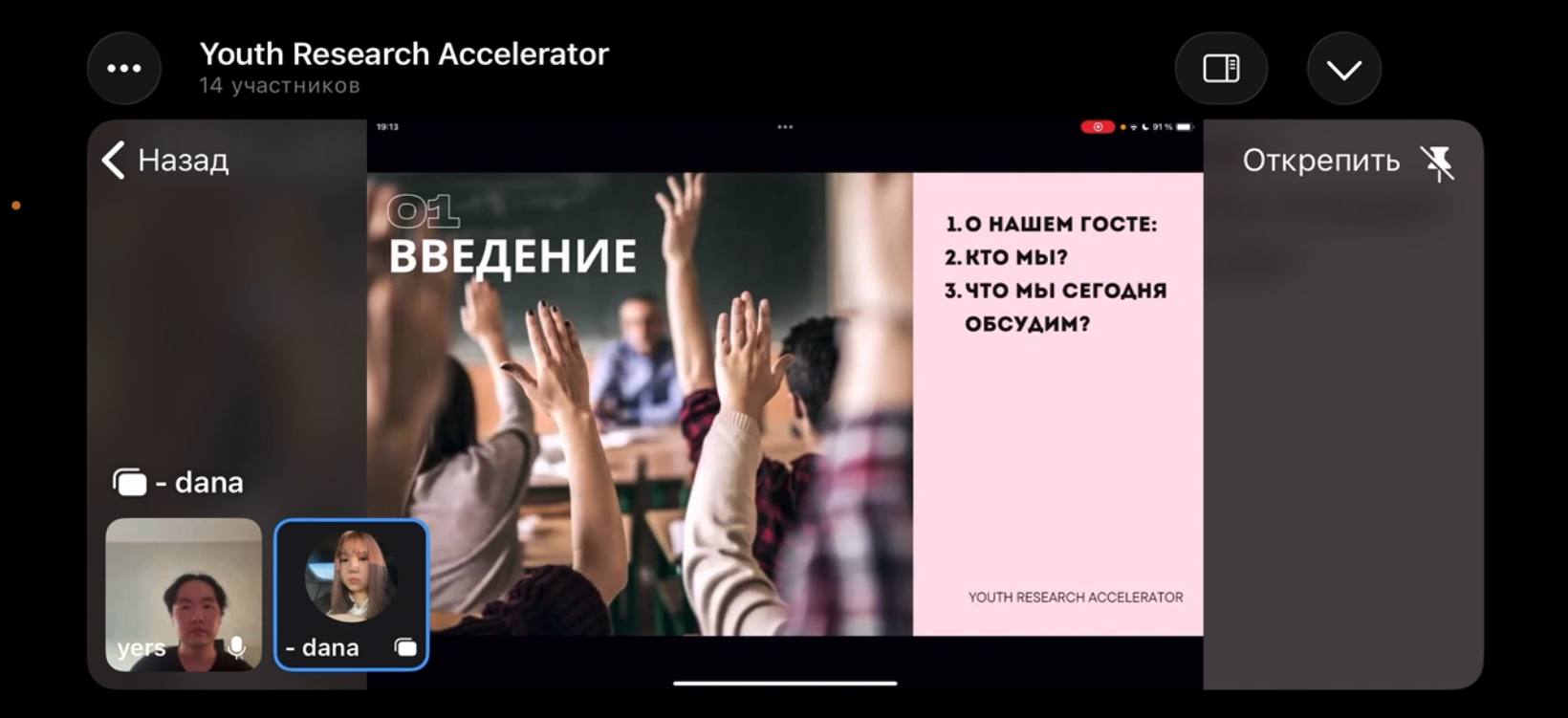
Thank you to everyone who joined today’s webinar!

We hope you found the session insightful and valuable. A special thank you to Yersultan for sharing his experience, practical advice, and inspiring insights! 📚

Unfortunately, due to technical issues, the webinar recording was not saved, so we won’t be able to share it afterward.

👌 Thank you for your understanding, and we look forward to seeing you at our future events!


Вопросы пишите в комментарий💗🌷


The webinar starts today at 7:00 PM! ✍️

Join us for an engaging interview where we’ll discuss research, ask interesting questions, and finish with a live Q&A, where you’ll have the chance to ask your own questions.

💔 The webinar will take place live on Telegram (Live Stream). We hope to see you there!


🦌 Summary of Literature vs. Literature Review. What are the differences? #additional

🌷Summary of Literature is primarily used amongst descriptive studies and introductory moments in order to list and articulate some researches, so therefore the synopsis barely consists of appropriate interpretation for itself.
The main thing you might do about the summary is to list researches and its integral parts in any subsequences, because this type of review should never have a flowing point until it is the summary.


🌷 Literature Review is a sufficient piece of what-you-call "research", because its functions are set to compare, differentiate, and derive similarities between the searched scientific projects.
In spite of its superficial resemblance to the Summary of Literature, the last one would and should never flow comparisons and analysis with deep focus on methodologies and other parts of the researches being observed.


🍭Use a summary when you need to report what a text says. Use a literature review when you need to build an argument about what the body of research as a whole shows.
If you write, “Study 1 found higher depression scores, and Study 2 found the same,” that is a summary. If you write, “Across studies, higher depression scores appear consistently, but findings vary by sample and measurement method,” that is a literature review-style synthesis.


🍂Beta Testers Wanted🍂

We are excited to share the first beta version of our SAT vocabulary learning platform!

If you'd like to help, we would really appreciate it if you could test the website and share your feedback. Feel free to report any bugs, confusing explanations, or suggest features that could make the platform even better :@dddnewji

Your feedback will help improve the experience for everyone. Thank you for being part of the beta! 🍭

🔗 https://noemavocab.lovable.app/dashboard


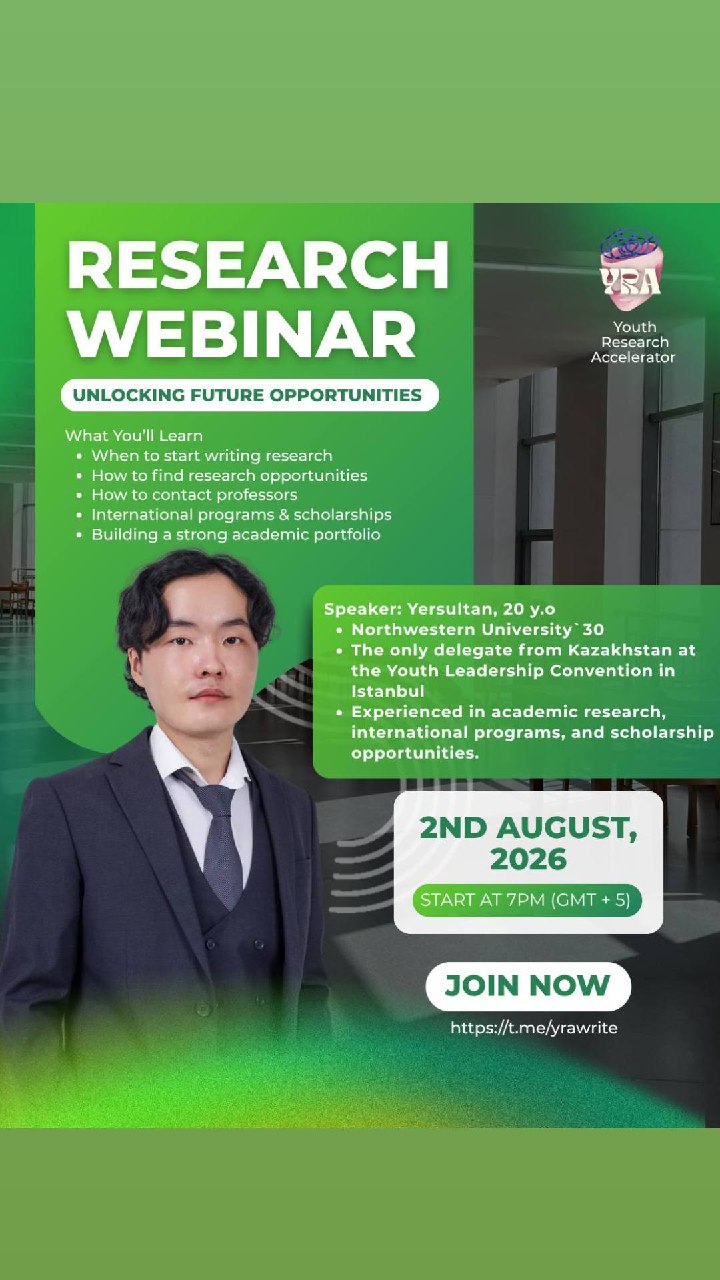
🙏🔅🔅🔅🔅🔅🔅🔅: How to Start Research & Find International Opportunities

Want to strengthen your university portfolio but don’t know where to begin?

Join us for a practical webinar where you’ll learn how to start your first research project and discover international opportunities available to high school students.

In this session, you’ll learn:
➖ When to start doing research in high school
➖ How to find your first research opportunities and competitions
➖ How to apply to programs like Pioneer, Polygence, and Lumiere
➖ Tips for reaching out to university
➖ Where to find international conferences, scholarships, and leadership programs

🎤 Speaker: Yersultan (20)
🌿Northwestern University’30
🌿The only delegate from Kazakhstan at the Youth Leadership Convention in Istanbul (partially supported by UN Geneva).
🌿Passionate about academic research and helping students discover global opportunities.

📅 Date: 2.08.2026
🔅 Time: 19:00 [GMT +5]
🔅 Format: YRA Live stream [in telegram]

Don’t miss this opportunity to take the first step toward building a competitive academic portfolio! 💻

20 last posts shown.