


🎨 We continue our journey through history and move into the 18th century – an age of sweeping reforms, decisive battles, palace coups and imperial expansion that transformed Russia into one of Europe's great powers.
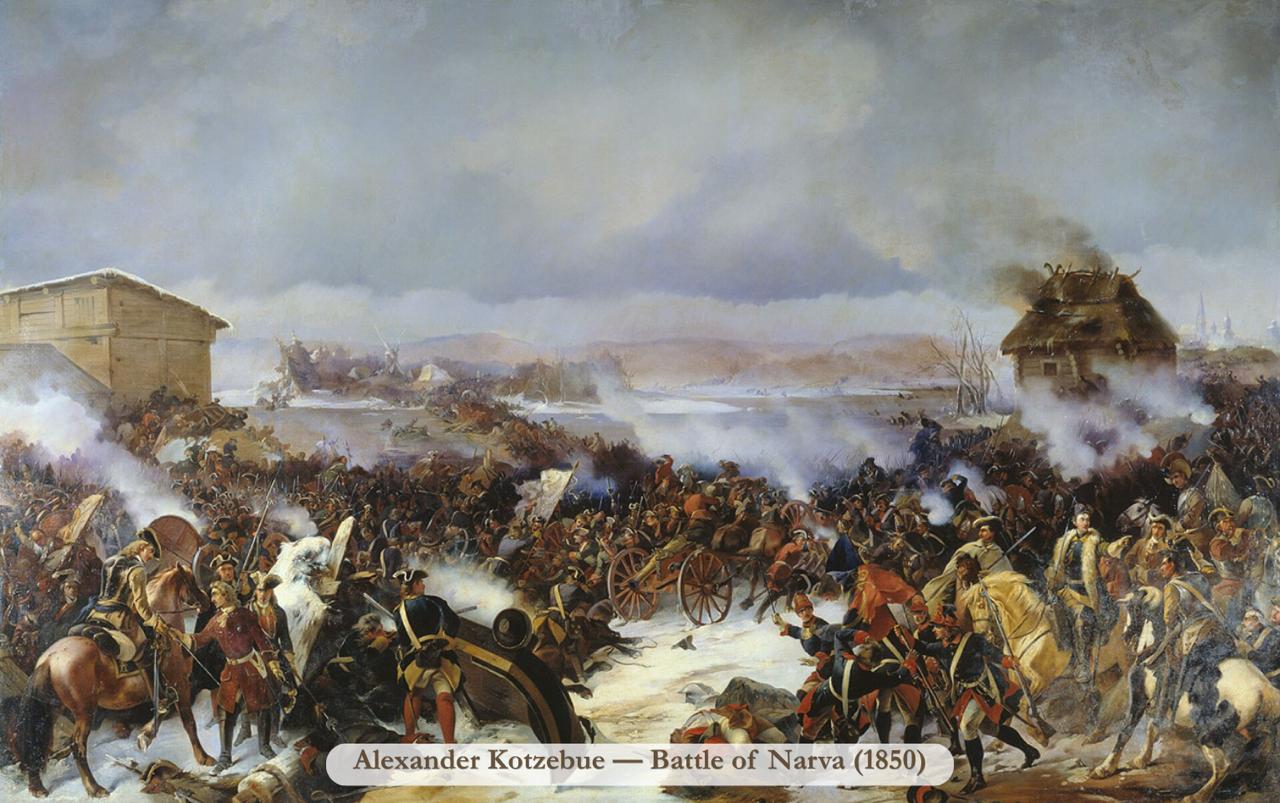
🖼️ Alexander Kotzebue – Battle of Narva (1850)
The defeat at Narva in 1700 became a turning point for Peter the Great. Rather than accepting failure, he launched sweeping military reforms that laid the foundation for Russia's future victories.
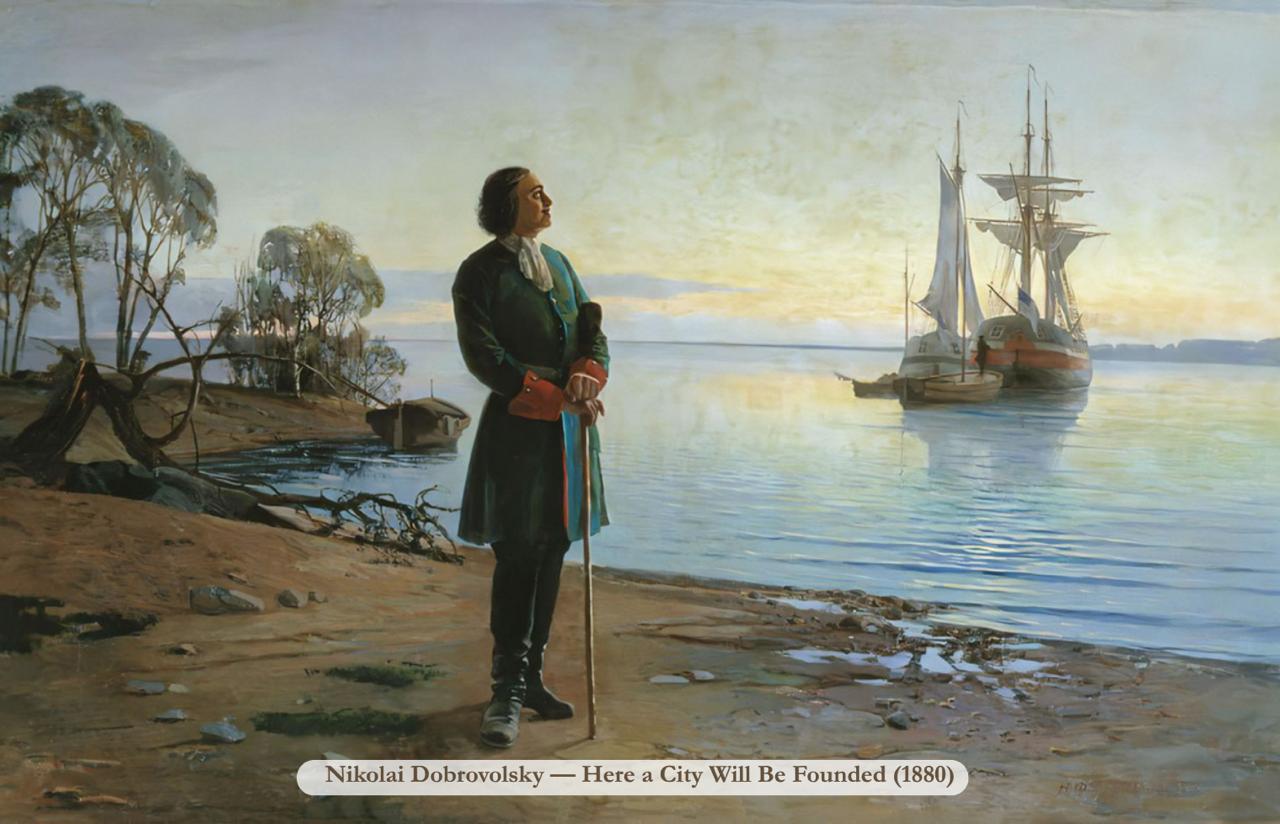
🖼️ Nikolai Dobrovolsky – Here a City Will Be Founded (1880)
This painting depicts the founding of St.Petersburg in 1703. Built on the Baltic coast, the new city soon became Russia's capital and a symbol of Peter the Great's vision to open the country to Europe.
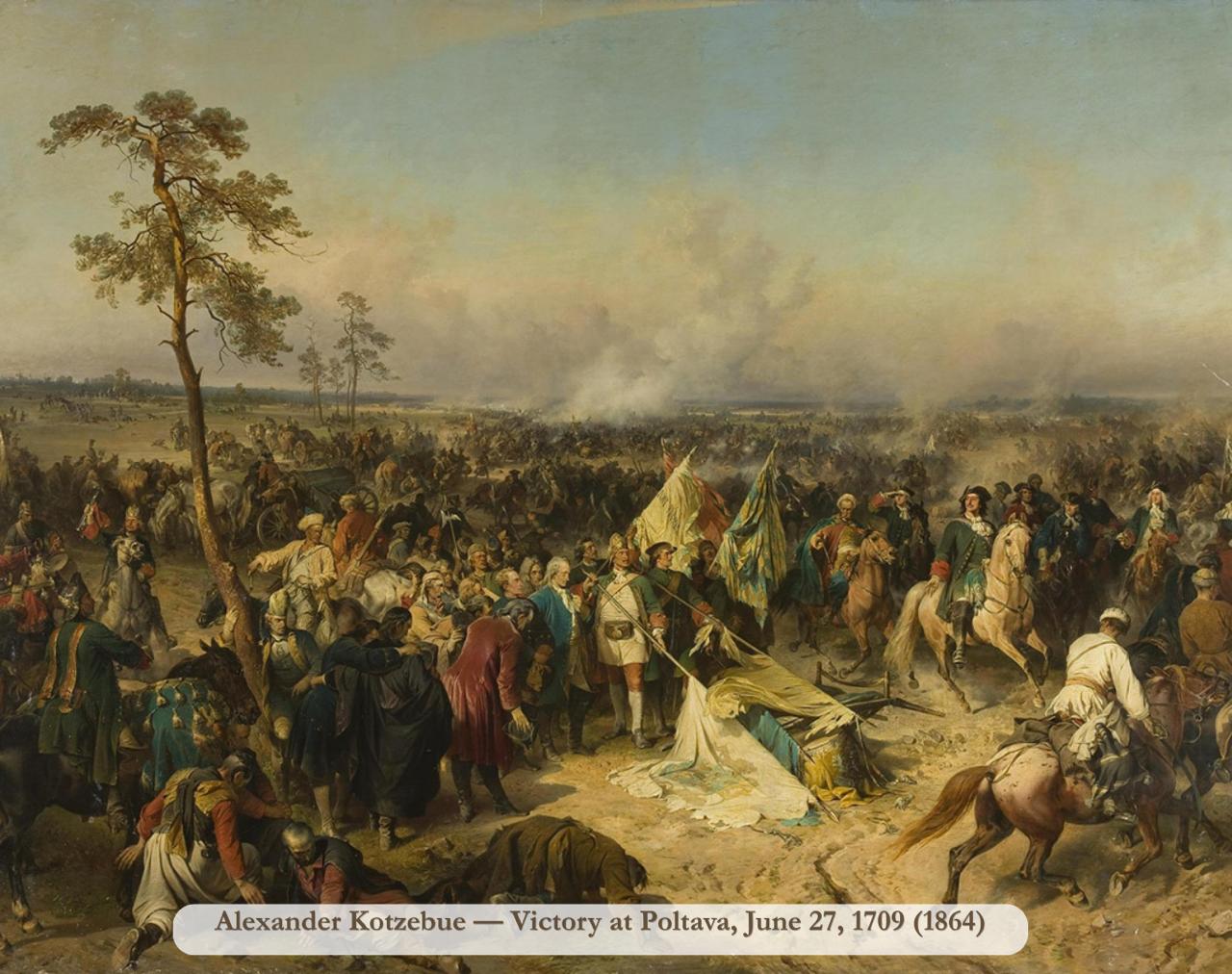
🖼️ Alexander Kotzebue – Victory at Poltava, June 27, 1709 (1864)
The Battle of Poltava marked the decisive turning point of the Great Northern War. Russia's victory established it as a major European power and paved the way for the proclamation of the Russian Empire.
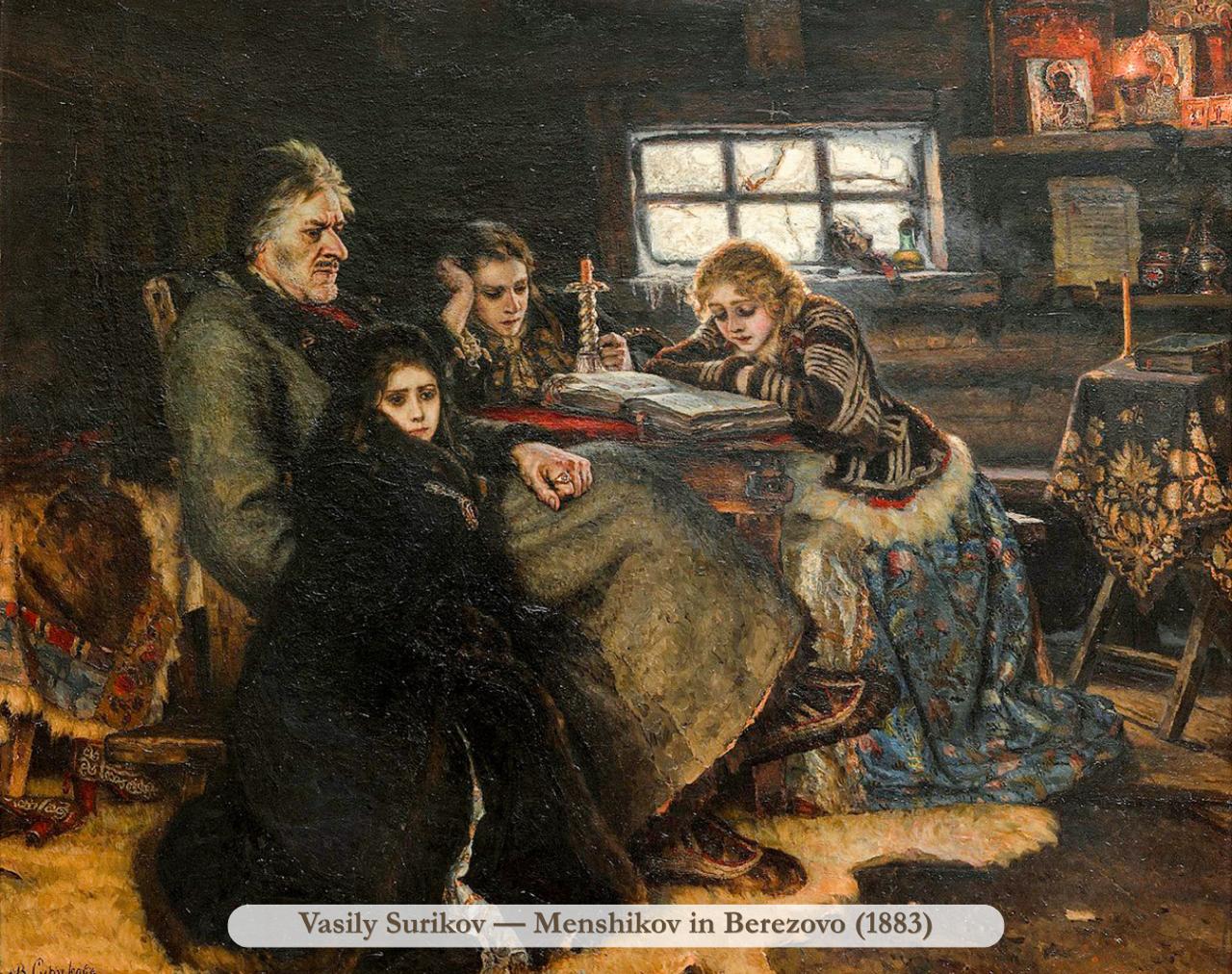
🖼️ Vasily Surikov – Menshikov in Berezovo (1883)
Once Peter the Great's closest ally and the most influential man in Russia, Alexander Menshikov eventually fell from power and was exiled to Siberia—a dramatic reminder of the instability of the Age of Palace Coups.
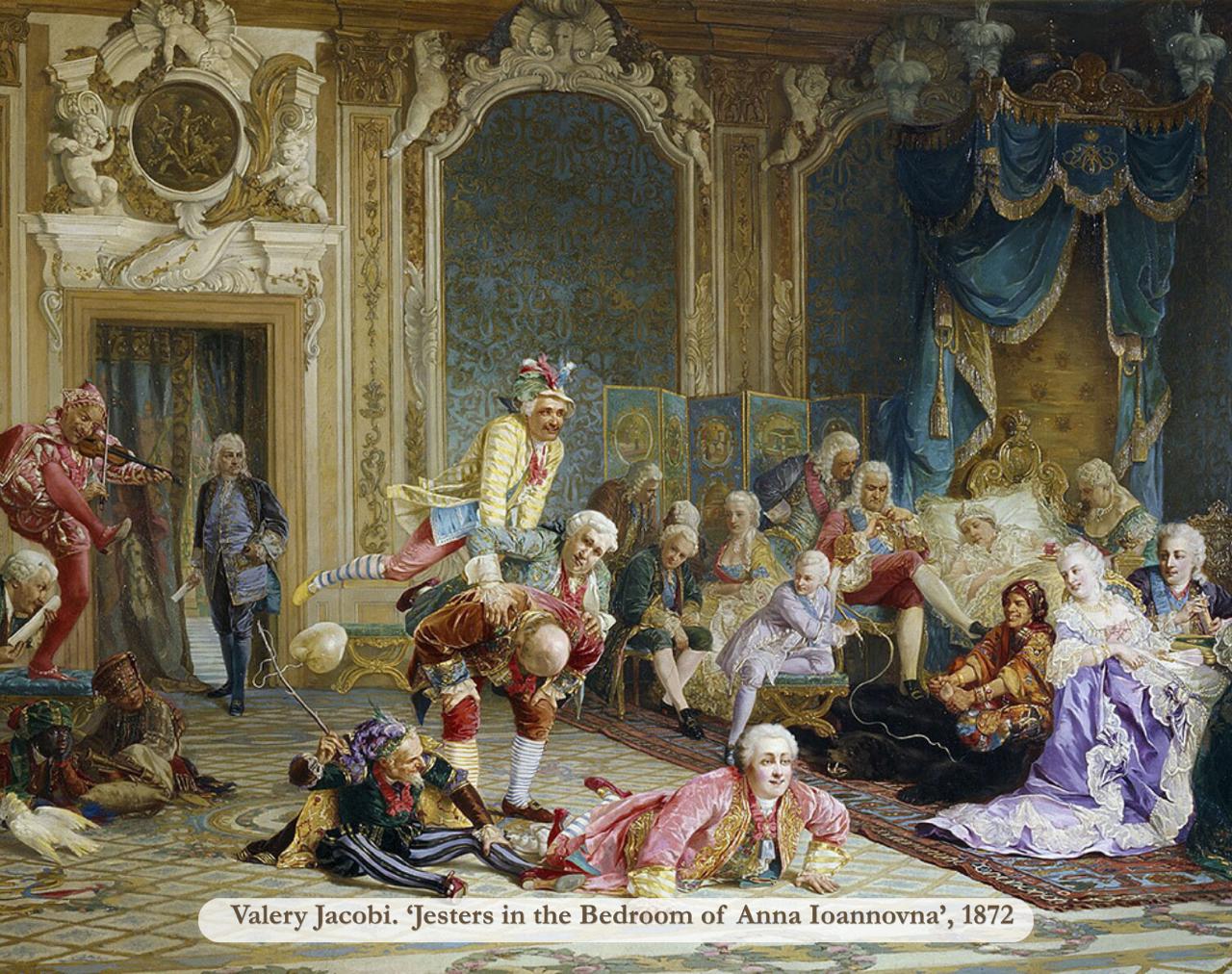
🖼️ Valery Jacobi – Jesters in the Bedroom of Anna Ioannovna (1872)
The painting reflects the extravagant court of Empress Anna Ioannovna, whose reign became known for lavish celebrations, theatrical spectacles and luxurious royal ceremonies.
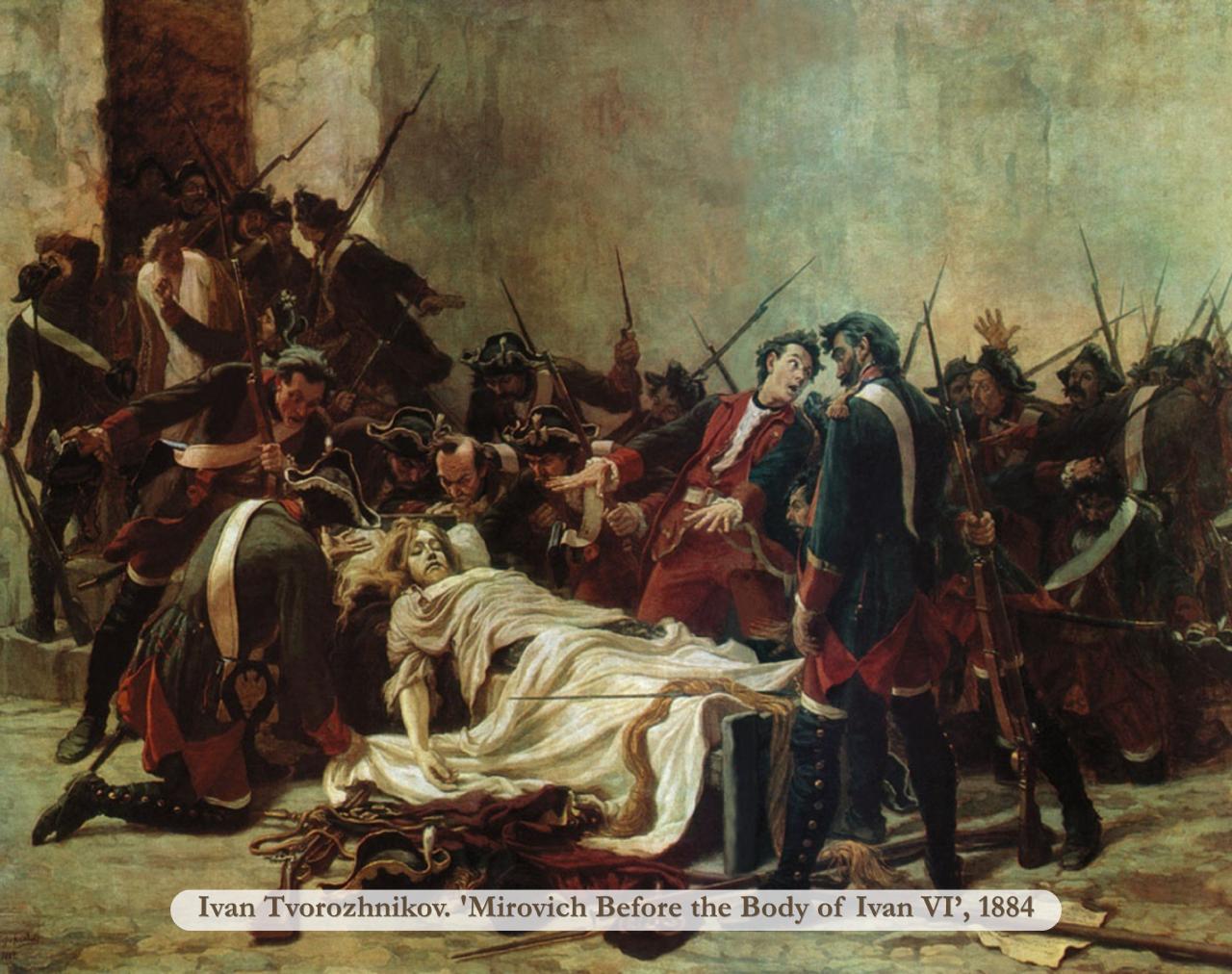
🖼️ Ivan Tvorozhnikov – Mirovich Before the Body of Ivan VI (1884)
It portrays the tragic fate of Ivan VI, the infant emperor who spent almost his entire life imprisoned before being killed during an unsuccessful attempt to restore him to the throne.
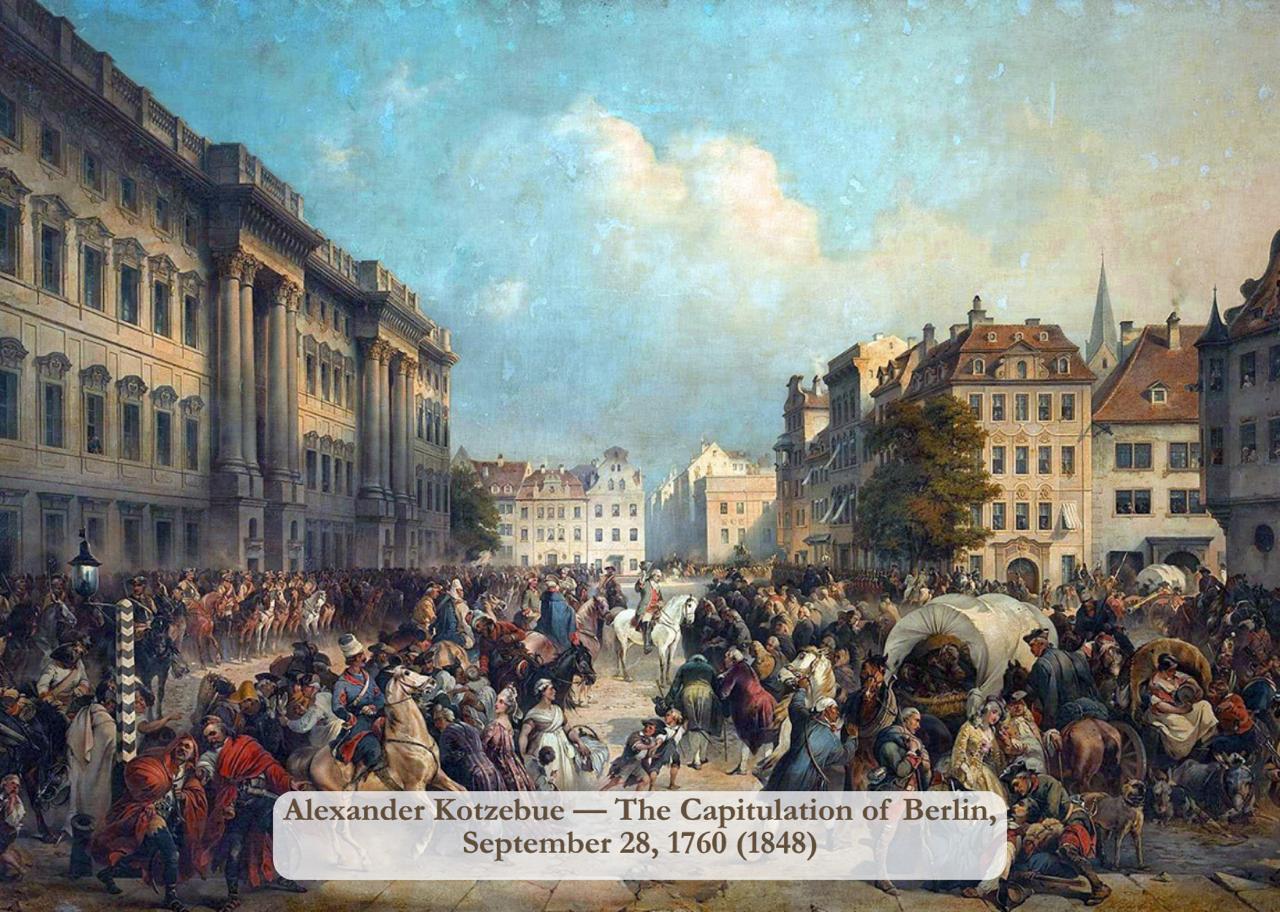
🖼️ Alexander Kotzebue –The Capitulation of Berlin, September 28, 1760 (1848)
During the Seven Years' War, Russian forces captured Berlin, demonstrating the growing military strength of the empire. The gains, however, were later returned to Prussia by Peter III.
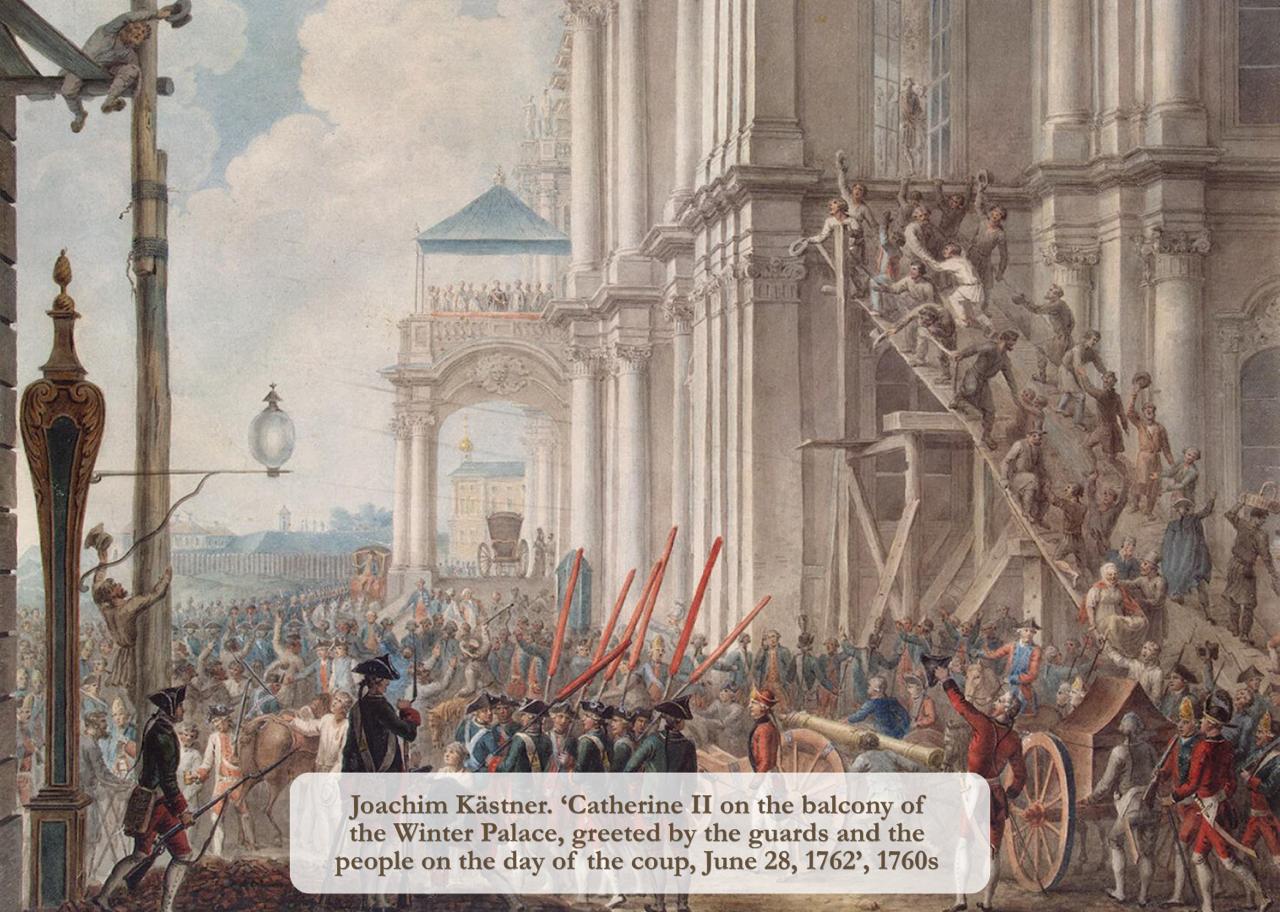
🖼️ Joachim Kästner – Catherine II on the Balcony of the Winter Palace, Greeted by the Guards and the People on the Day of the Coup, June 28, 1762 (1760s)
The artwork commemorates the coup that brought Catherine the Great to power, beginning one of the longest and most influential reigns in Russian history.
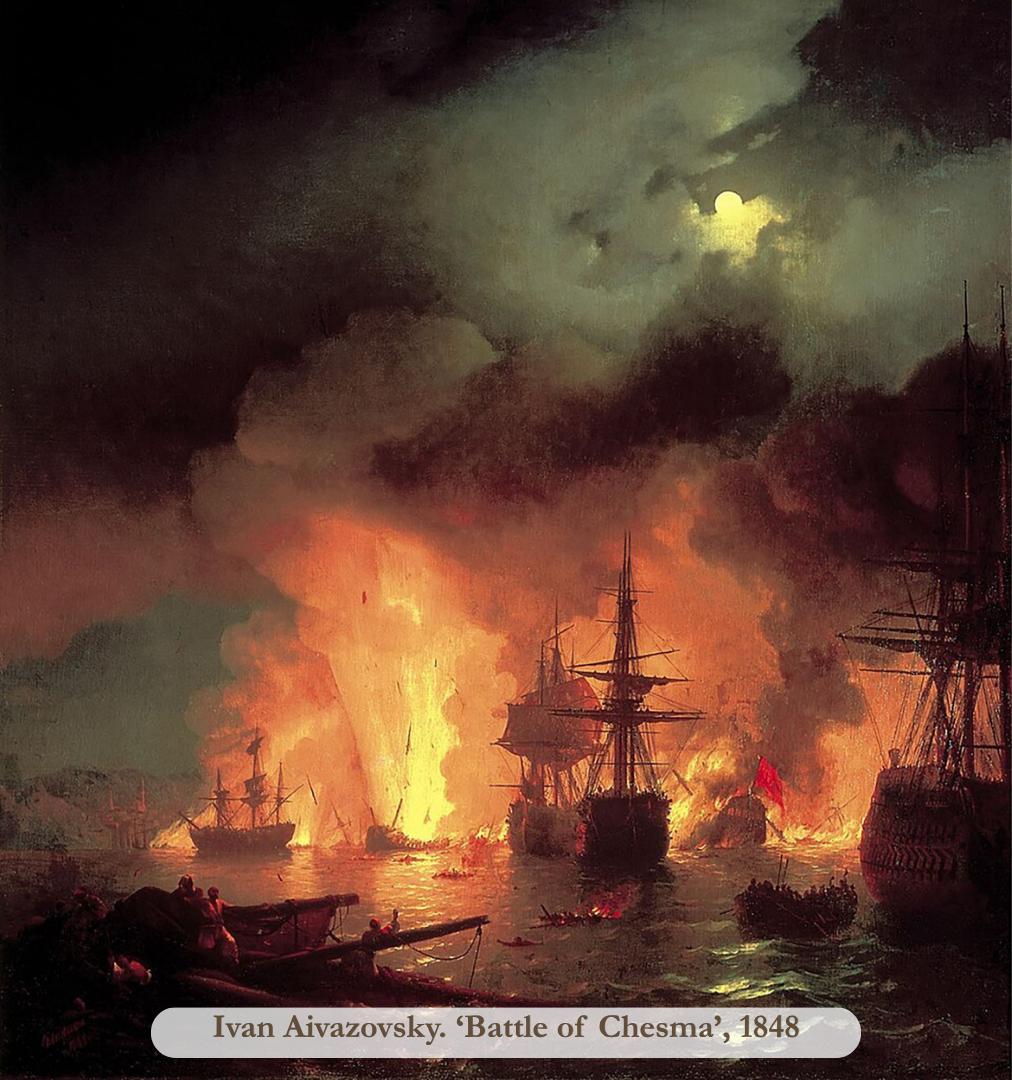
🖼️ Ivan Aivazovsky – Battle of Chesma (1848)
The destruction of the Ottoman fleet at Chesma in 1770 became one of Russia's greatest naval victories and strengthened its position in the Black Sea region.
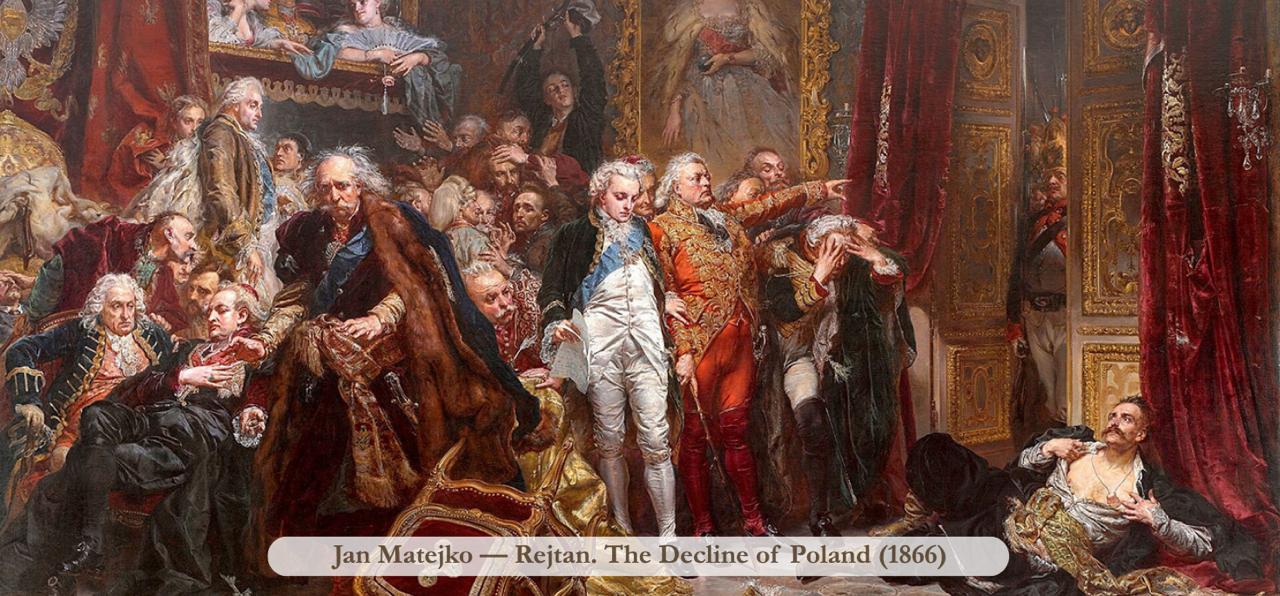
🖼️ Jan Matejko – Rejtan. The Decline of Poland (1866)
This famous painting captures the dramatic moment surrounding the First Partition of the Polish-Lithuanian Commonwealth, an event that eventually erased the state from the map of Europe.
© Gateway to Russia
🖼️ Alexander Kotzebue – Battle of Narva (1850)
The defeat at Narva in 1700 became a turning point for Peter the Great. Rather than accepting failure, he launched sweeping military reforms that laid the foundation for Russia's future victories.
🖼️ Nikolai Dobrovolsky – Here a City Will Be Founded (1880)
This painting depicts the founding of St.Petersburg in 1703. Built on the Baltic coast, the new city soon became Russia's capital and a symbol of Peter the Great's vision to open the country to Europe.
🖼️ Alexander Kotzebue – Victory at Poltava, June 27, 1709 (1864)
The Battle of Poltava marked the decisive turning point of the Great Northern War. Russia's victory established it as a major European power and paved the way for the proclamation of the Russian Empire.
🖼️ Vasily Surikov – Menshikov in Berezovo (1883)
Once Peter the Great's closest ally and the most influential man in Russia, Alexander Menshikov eventually fell from power and was exiled to Siberia—a dramatic reminder of the instability of the Age of Palace Coups.
🖼️ Valery Jacobi – Jesters in the Bedroom of Anna Ioannovna (1872)
The painting reflects the extravagant court of Empress Anna Ioannovna, whose reign became known for lavish celebrations, theatrical spectacles and luxurious royal ceremonies.
🖼️ Ivan Tvorozhnikov – Mirovich Before the Body of Ivan VI (1884)
It portrays the tragic fate of Ivan VI, the infant emperor who spent almost his entire life imprisoned before being killed during an unsuccessful attempt to restore him to the throne.
🖼️ Alexander Kotzebue –The Capitulation of Berlin, September 28, 1760 (1848)
During the Seven Years' War, Russian forces captured Berlin, demonstrating the growing military strength of the empire. The gains, however, were later returned to Prussia by Peter III.
🖼️ Joachim Kästner – Catherine II on the Balcony of the Winter Palace, Greeted by the Guards and the People on the Day of the Coup, June 28, 1762 (1760s)
The artwork commemorates the coup that brought Catherine the Great to power, beginning one of the longest and most influential reigns in Russian history.
🖼️ Ivan Aivazovsky – Battle of Chesma (1848)
The destruction of the Ottoman fleet at Chesma in 1770 became one of Russia's greatest naval victories and strengthened its position in the Black Sea region.
🖼️ Jan Matejko – Rejtan. The Decline of Poland (1866)
This famous painting captures the dramatic moment surrounding the First Partition of the Polish-Lithuanian Commonwealth, an event that eventually erased the state from the map of Europe.
© Gateway to Russia