


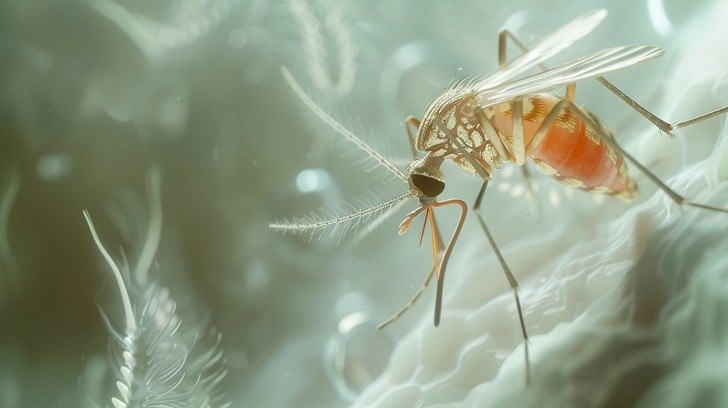
Scientists Reveal Why Mosquitoes Prefer Some People
Some people are genuinely mosquito magnets, and a new study published in Cell finally explains why. Researchers at Rockefeller University discovered that certain individuals have significantly higher levels of carboxylic acids—fatty acids produced in the skin's oils. This creates a scent signature that can make a person up to 100 times more attractive to mosquitoes than another.
The finding came from a three-year experiment where human scents were collected on nylon stockings and tested against Aedes aegypti mosquitoes. Strikingly, the level of attractiveness remained perfectly stable for each person over the entire study period, proving it is a fixed biological trait, determined by genetics.
According to the researchers, this explains why some people are relentlessly bitten while others are spared—and why changing your soap or diet makes no real difference. The study opens the door for future repellents that could mask these human scent compounds.
Some people are genuinely mosquito magnets, and a new study published in Cell finally explains why. Researchers at Rockefeller University discovered that certain individuals have significantly higher levels of carboxylic acids—fatty acids produced in the skin's oils. This creates a scent signature that can make a person up to 100 times more attractive to mosquitoes than another.
The finding came from a three-year experiment where human scents were collected on nylon stockings and tested against Aedes aegypti mosquitoes. Strikingly, the level of attractiveness remained perfectly stable for each person over the entire study period, proving it is a fixed biological trait, determined by genetics.
According to the researchers, this explains why some people are relentlessly bitten while others are spared—and why changing your soap or diet makes no real difference. The study opens the door for future repellents that could mask these human scent compounds.