


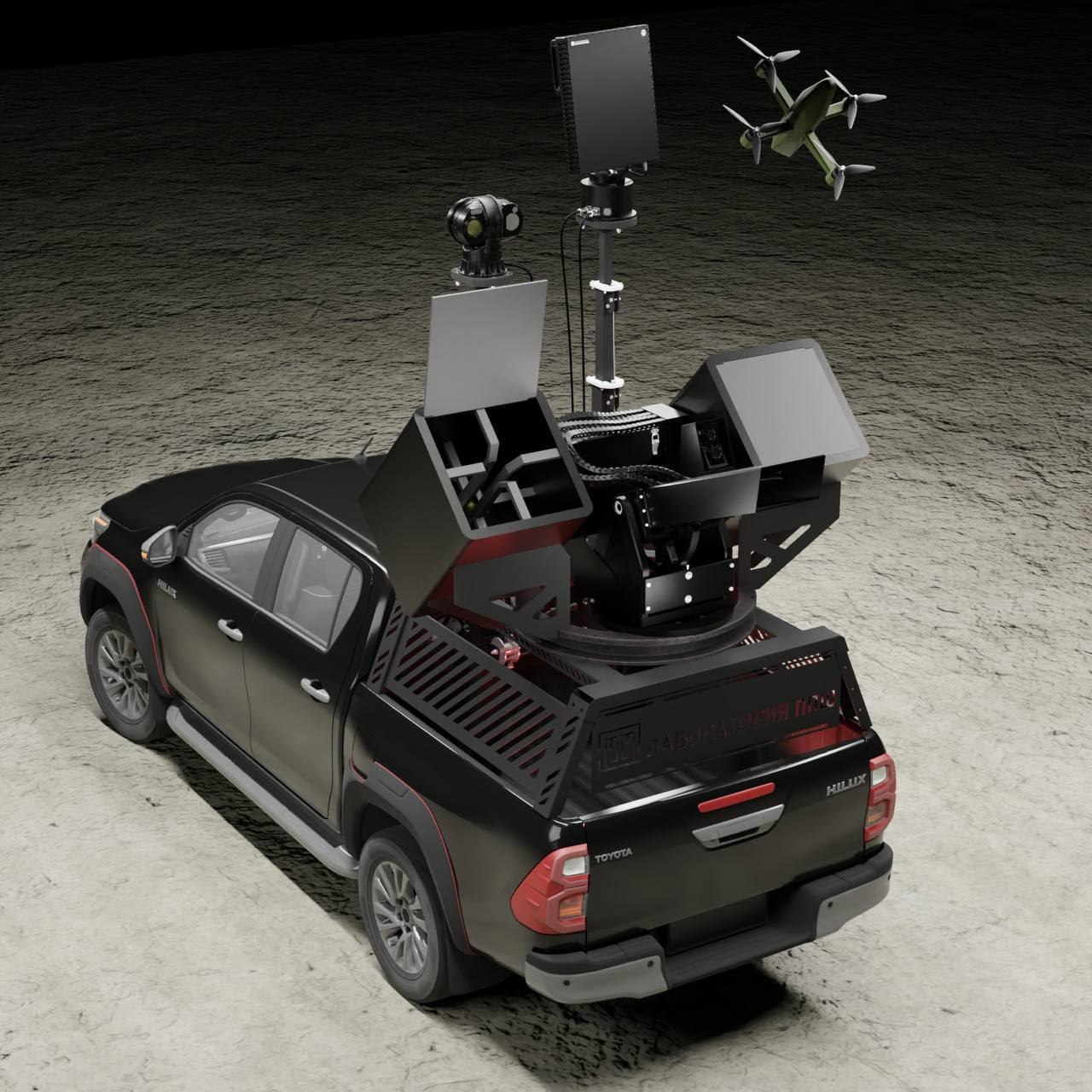
✨A new generation of short-range air defense systemshas been demonstrated atthe R&D Laboratory for Small Arms✨
Based on the "Katran" complex, a system has been created that integrates radar, a control system, and a "Martsishka" drone interceptor.
The system operates as follows: the radar detects an enemy drone ➡️ determines its coordinates and transmits the data to the tracking system ➡️ the drone interceptor is automatically launched from its container towards the target and engages it.
The entire process, from detection to target engagement, occurs in automatic mode.
✨This is an absolutely correct direction for the development of drone countermeasures systems, consistent with the current technological paradigm of warfare (the use of low-speed, remotely controlled propeller drones). It is urgently necessary to equip all border/front-line regions of Russia, as well as perimeters around energy infrastructure facilities, with such and similar systems (and these facilities themselves should be interested in this).
✨⭐️However, such interceptors operate within a relatively limited range (typically up to 10 km) and reach a speed of up to 350 km/h (in the final stage), which is insufficient to engage jet-powered drones, which will soon become more prevalent among the enemy (‼️).
Therefore, the Ministry of Defense and the defense industry must now prioritize the proactive development and deployment of drone countermeasures systems in the most vulnerable areas, based on different physical principles and equipped with intelligent guidance and control systems.
It is crucially important to surpass the enemy in technological progress in the development of weapons and to ensure that units are equipped with them in a timely manner.
⚡️Two Majors
Based on the "Katran" complex, a system has been created that integrates radar, a control system, and a "Martsishka" drone interceptor.
The system operates as follows: the radar detects an enemy drone ➡️ determines its coordinates and transmits the data to the tracking system ➡️ the drone interceptor is automatically launched from its container towards the target and engages it.
The entire process, from detection to target engagement, occurs in automatic mode.
✨This is an absolutely correct direction for the development of drone countermeasures systems, consistent with the current technological paradigm of warfare (the use of low-speed, remotely controlled propeller drones). It is urgently necessary to equip all border/front-line regions of Russia, as well as perimeters around energy infrastructure facilities, with such and similar systems (and these facilities themselves should be interested in this).
✨⭐️However, such interceptors operate within a relatively limited range (typically up to 10 km) and reach a speed of up to 350 km/h (in the final stage), which is insufficient to engage jet-powered drones, which will soon become more prevalent among the enemy (‼️).
Therefore, the Ministry of Defense and the defense industry must now prioritize the proactive development and deployment of drone countermeasures systems in the most vulnerable areas, based on different physical principles and equipped with intelligent guidance and control systems.
It is crucially important to surpass the enemy in technological progress in the development of weapons and to ensure that units are equipped with them in a timely manner.
⚡️Two Majors