
AREA


Гео и язык канала: Россия, Русский
Категория: Другое


African-Russian Energy Association (AREA)
Website: https://arenergy.pro/eng
#WMWAT
Канал в перечне персональных страниц пользователей РКН. Уникальная ссылка: https://knd.gov.ru/license?id=6756e7080acf9c1f42dcb6aa&registryType=bloggersPermission

Зарегистрирован в РКН
Связанные каналы

Гео и язык канала
Россия, Русский
Категория
Другое
Статистика
Фильтр публикаций


Rwanda Aims to Train 230 Nuclear Specialists by 2028

Rwanda plans to build a workforce of over 230 nuclear energy specialists by 2028. This goal is outlined in the published Nuclear Industrial Localization Roadmap and is intended to provide personnel for future power generation facilities, as well as for regulatory and safety bodies.

Currently, only 30–50 experts are employed at the country's relevant institutions. This gap must be bridged across a wide range of areas.

According to the roadmap’s authors, some of the required competencies will take 10–15 years to reach full maturity. This means that the current student intake is not merely an educational initiative but a critical infrastructure component; without it, launching the reactor in the early 2030s would be impossible. Previously, Fidel Ndahayo, the Chief Executive Officer of the Rwanda Atomic Energy Board, estimated that the first power unit would require a staff of 234 during the initial operational phase.

The University of Rwanda, in collaboration with RAEB, has launched a four-year Bachelor of Science program in Nuclear Science and Technology; the first cohort for the 2025/26 academic year consisted of 52 students. However, the roadmap explicitly states that a bachelor's degree is insufficient — master's and doctoral programs will also be required.

Rwanda has been cooperating with Rosatom in the field of nuclear education since 2018. More than 200 Rwandan students are studying at Russian universities. In June 2026, the parties held the first meeting of the Joint Coordination Committee in Moscow and approved a roadmap for the small modular reactor (SMR) project. An agreement was signed in 2019 to establish a Center for Nuclear Science and Technology (CNST) featuring a 10 MW research reactor.

Workforce training is proceeding in parallel with institutional development: the RAEB was established in 2020, a university program has been launched, and a coordination committee with Rosatom is in operation. The target is to commission the first SMR between 2030 and 2032.

#Rwanda #NuclearEnergy #Africa


Russia and Togo Shape Energy and Transport Agenda

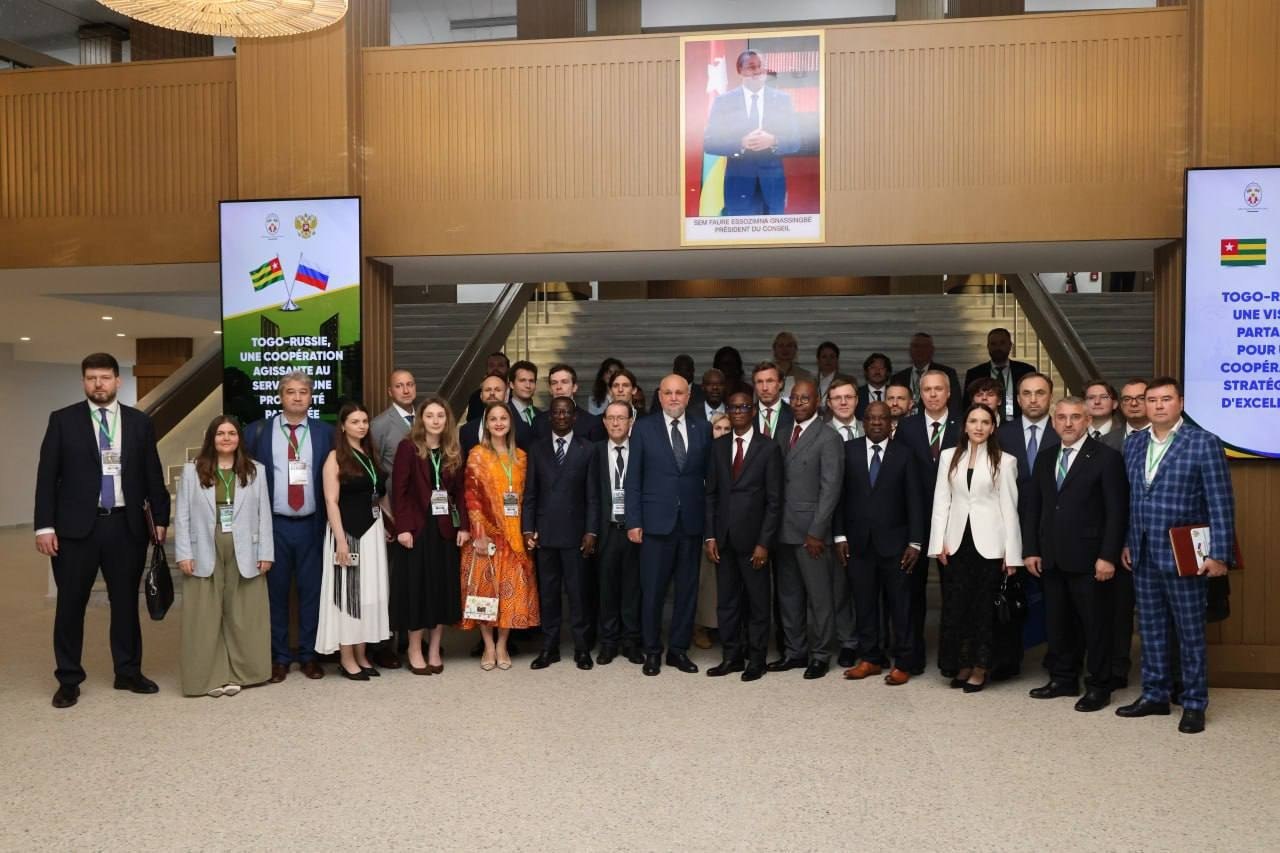
As part of the Russia-Togo Intergovernmental Commission on Trade, Economic, Scientific and Technical Cooperation — co-chaired by Russian Energy Minister Sergey Tsivilev and Togolese Minister of Economy and Strategic Monitoring Badanam Patoki — the parties discussed the creation of a transport corridor to West Africa and a comprehensive master plan for Togo’s water and energy resources.

In the energy sector, the development of a comprehensive master plan for Togo’s water and energy resources took center stage. The document will identify key water users, assess water balances for related economic sectors, and outline a detailed plan for constructing hydroelectric power plants and modernizing existing infrastructure. The results of this work are expected to form the basis of Togo’s national policy on water and energy resource management.

Additionally, cooperation agreements were signed between the Institute for the History of Material Culture of the Russian Academy of Sciences (RAS) and the National Commission on Cultural Heritage of the Togolese Republic, as well as between the University of Lomé and both the Institute for African Studies of the Russian Academy of Sciences and the A.V. Topchiev Institute of Petrochemical Synthesis.

The water resources master plan is significant because it establishes a systemic framework for hydropower development: assessing water balances and identifying key water users allows for the interests of various sectors to be taken into account when planning the construction of hydroelectric power plants and the modernization of infrastructure.

For Russia, this opens up further opportunities to participate in hydropower and infrastructure modernization projects in Togo. The agreements between the two countries' scientific and educational institutions demonstrate that cooperation is developing not only within the framework of individual economic projects but also at the institutional level.

The dialogue will continue on the sidelines of the Third Russia–Africa Summit and the Russia–Africa Economic and Humanitarian Forum, to be held in Moscow on October 28–29, 2026.

#Togo #Russia #HPP


South Sudan Bets on Fulla Hydropower Plant as Foundation for Energy Sovereignty

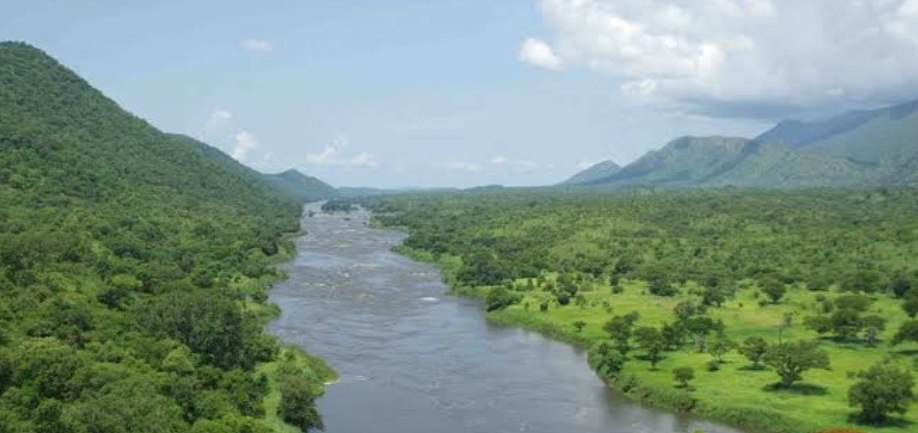
The government of South Sudan is intensifying efforts to implement the Fulla hydroelectric power plant project on the White Nile. During a visit to the Fulla Falls in the Nimule area (Eastern Equatoria State), Minister of Energy and Dams Agok Makur Kur described the facility as a "powerful engine" for the country's economic transformation.

According to estimates by the Nile Basin Initiative, the Grand Fulla project has a potential capacity of approximately 1,080 MW, while the government projects a potential output of up to 1,800 MW for the entire cascade. The project is among 34 priority facilities approved by the Council of Ministers and is positioned as a key driver of industrial development and stable electricity supply.

In August 2024, RusHydro signed a memorandum of cooperation on hydropower with South Sudan. Discussions regarding the revival of a previously suspended agreement took place in September 2026; a meeting between Minister Agok and Russian Ambassador Alexander Kosmodemyansky focused on launching joint projects in hydropower, the oil and gas sector, and renewable energy. Russian companies are prepared to supply turbines, generators, and equipment for the Fulla plant and have proposed developing a comprehensive plan for the country's power sector development.

For South Sudan — where most consumers rely on diesel generators and electrification rates remain among the lowest in the world — prioritizing large-scale hydropower offers a way to break free from energy isolation.

However, implementation hinges less on technology than on regional dynamics. Egypt’s stance remains cautious: Cairo has stated it has no objections to the Fulla project, provided its own interests are not compromised.

#SouthSudan #Fulla #HydropowerPlant


Nigeria Accelerates Electrification: Over 5 Million Off-Grid Connections in 2025–2026

Nigeria recorded over 5 million new off-grid electricity connections during the 2025–2026 period. This was announced by Dayo Olovoniyi, Technical Lead for the Mission 300 program in Nigeria, during the launch of new solar products in Lagos.

Mission 300 is a joint initiative by the African Development Bank (AfDB) and the World Bank aimed at connecting 300 million Africans to electricity by 2030. According to the organizers, the program has already provided electricity access to 50 million people across the continent, with 4.5 million of them in Nigeria.

A key support mechanism is the DARES (Distributed Access through Renewable Energy Scale-up) program, implemented by the Rural Electrification Agency (REA) with $750 million in World Bank funding. The program provides targeted grants to companies deploying solar mini-grids and standalone systems in rural and underserved communities. DARES aims to reach 17.5 million Nigerians by 2028.

As part of this trend, Sun King introduced a 5 kVA solar inverter — expandable to 30 kVA — and a 210-liter solar freezer, both designed for households and small businesses seeking an alternative to unreliable centralized power.

#Nigeria #Electrification #SolarEnergy


Zimbabwe Takes Steps to Unlock Nuclear Energy Potential

Zimbabwe is actively moving toward launching a national nuclear program. As Energy and Power Development Minister July Moyo stated at the 70th IAEA General Conference in Vienna, the country views nuclear energy as a part of a long-term strategy to ensure a stable power supply and support industrialization.

Zimbabwe is closely monitoring the development of advanced nuclear technologies—particularly Small Modular Reactors (SMRs)—while simultaneously establishing the institutional, workforce, regulatory, and technical foundations for its future nuclear program.

In 2021, Rosatom and Zimbabwe’s Ministry of Energy signed a memorandum of cooperation on the peaceful use of nuclear energy. Minister Moyo expressed hope that nuclear reactors would be operational in Zimbabwe within a decade. "Rosatom helped us develop a roadmap," he noted.

Instead of building a large-scale nuclear power plant, Zimbabwe is opting for modular reactors, which reduces both financial costs and construction time. Alongside the search for a technology partner, the country is investing in workforce training and the development of a regulatory framework.

Zimbabwe plans to increase its electricity generation capacity to 4,000 MW by 2035 (up from the current 2,600 MW). Nuclear energy is viewed as a key tool for achieving this goal, alongside hydroelectric and thermal power generation.

#Africa #Zimbabwe #Energy #Rosatom


Ethiopia Expands Energy Cooperation with Russia

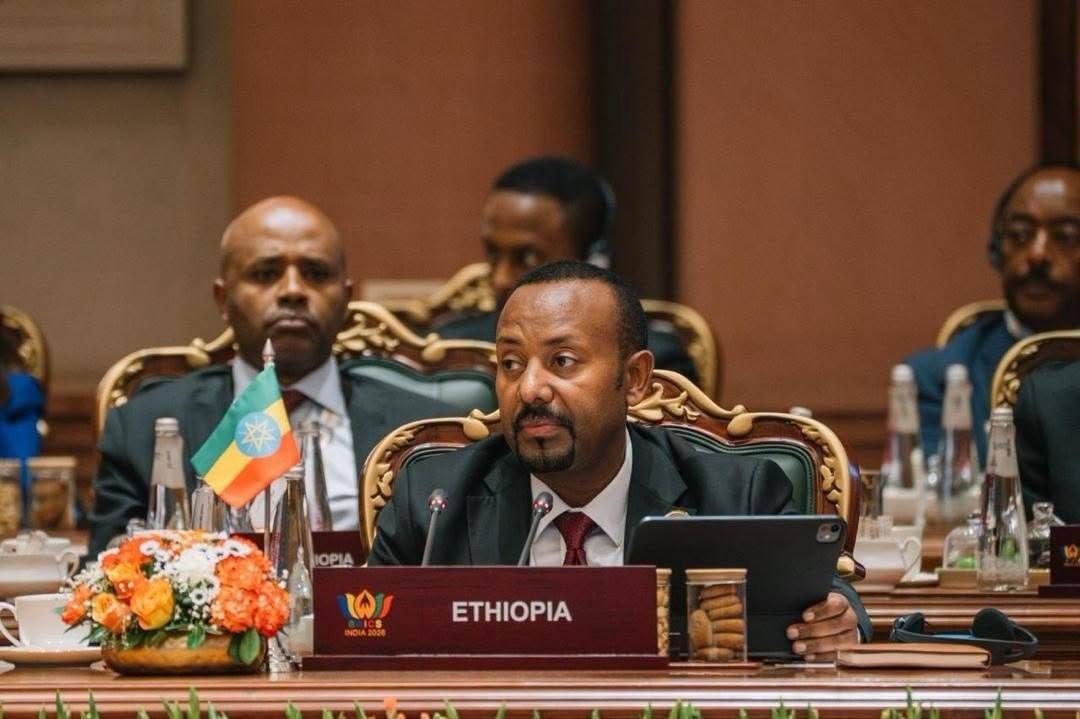
Following the 18th summit in New Delhi, BRICS nations adopted a declaration outlining a course of action for reforming the global governance system and fostering cooperation in energy, trade, and artificial intelligence. Indian Prime Minister Narendra Modi described the September 12 talks as highly significant and called for the reform of international institutions.

On the sidelines of the summit, Ethiopian Prime Minister Abiy Ahmed Ali expressed Addis Ababa's readiness to partner with BRICS in the fields of mineral resources, energy, and AI. He also discussed expanding ties in defense, trade, and technology—as well as preparations for COP32—with Russian President Vladimir Putin.

Separately, Alexey Likhachev, head of the state corporation Rosatom, reported Ethiopia's interest in the rapid development of nuclear energy. According to him, initial agreements are already in place, though several stages must be completed before construction of a nuclear power plant can begin. Ethiopia remains one of the most promising countries for the development of Russia's international cooperation in the nuclear sector.

Ethiopia is consistently strengthening its position within multilateral frameworks and offering partners access to its mineral resources. Nuclear energy is emerging as a new area of ​​Russian-Ethiopian cooperation. Participation in the BRICS energy declaration establishes a framework for the implementation of specific projects.

#Africa #Ethiopia #BRICS #Energy #Rosatom


Russia strengthens its position in nuclear energy and gains control of the nuclear fuel market

While the West debates the green transition and tallies the cost of solar panels, a much more critical dependency is taking shape in the nuclear energy sector.

According to estimates by the British Centre for Strategic Advantage (CSA), up to 36% of global uranium production could fall under Russia’s direct or indirect control by 2040. Currently, that figure stands at nearly a quarter.

A crucial detail often overlooked is that only about 5% of the world's uranium is mined within Russia itself.
The remainder comes from Rosatom’s foreign assets in Kazakhstan, Tanzania, and Namibia, as well as growing cooperation with Niger. While Russia often acts merely as a partner or minority shareholder on paper, it retains operational control and access to raw material flows.

The situation regarding enrichment is even more critical. Russia accounts for approximately 40% of global uranium enrichment capacity. This represents the most significant bottleneck and the most technologically complex stage of the entire supply chain. Western companies (such as Urenco and Orano) cannot rapidly scale up volumes; building new plants requires years and billions in investment.

Add to this the factor of "fuel geometry." Many reactors are designed specifically for Russian fuel assemblies. Quickly switching suppliers entails costly modifications, recertification processes, and years of downtime.

The result is a classic strategic trap: a loss of nuclear fuel supplies cannot be quickly offset in the same way as a shipment of LNG. A sudden severance of ties risks causing physical shortages and a manifold increase in electricity prices. CSA analysts explicitly compare this future dependency to Europe’s reliance on Russian gas prior to 2022. There is also an alternative scenario—in which Russia’s share drops to around 14%—triggered by the impact of sanctions, disputes over African assets, and a hardening of Kazakhstan’s stance. However, the window for such a shift is narrowing.

Nuclear energy is once again becoming not only a climate tool but a geopolitical one. And for now, Russia holds a strong hand in this game.

#Russia #Rosatom #NuclearEnergy


Russian Nuclear Energy on the African Continent: Prospects for Mutual Cooperation for Decades

The Russian state corporation Rosatom is implementing a full nuclear cycle strategy in Africa, combining control over raw material production with technology exports.

On the one hand, the corporation guarantees resource security: projects in Tanzania (Mkuju River, with a target output of 3,000 tons by 2029) and production agreements in Niger (with a simultaneous proposal to build two 2 GW reactors) strengthen the vertically integrated model.

On the other hand, Russia is selling comprehensive technological sovereignty to countries that are dissatisfied with the Western approach.

The flagship El Dabaa Nuclear Power Plant project in Egypt is expanding to include water desalination and nuclear medicine, transforming the relationship from a buyer-seller format to a long-term partnership.

In Ethiopia, contracts have been signed for a feasibility study for a Nuclear Technology Center and the first nuclear power plant to address the baseload generation gap.

Rwanda is focusing on small modular reactors by establishing a research center.

In Burkina Faso, Rosatom is holding consultations on advanced global regulatory standards.

The success of the strategy is ensured by a package deal (technology and loans), the absence of political barriers, and a commitment to long-term commitment. While Western companies are constrained by their own sanctions and project costs, Russia is consistently offering solutions to energy shortages in African countries, laying a solid foundation for relations for decades to come.

#Rosatom #Africa #Russia


Russia is shifting its paradigm: from raw materials to technology exports to BRICS.

Energy Minister Sergei Tsivilev announced a strategic shift in cooperation with its BRICS partners. Russia intends to develop cooperation not only through traditional energy supplies but also through the active export of technologies and engineering solutions.

New members of the organization (Ethiopia, Iran, Indonesia, the UAE, and others) are experiencing severe shortages of baseload generation in some regions. Many of them have ambitious plans for further industrialization and production growth, but lack the necessary technologies in nuclear and hydropower.

Rosatom is a global leader in nuclear technology with a completely independent supply chain (from uranium mining to fuel and services). The corporation is already building or plans to build units in India, China, Egypt, Turkey, and elsewhere. Another strength of the Russian energy sector is RusHydro, which has expertise in large-scale hydropower, among the best in the world. The potential for projects in Africa and South America is enormous.

The economic impact of shifting from one-time resource sales to long-term service contracts is significant and significantly increases added value. BRICS partners are willing to pay in their national currencies, reducing dependence on Western sanctions.

A geopolitical bonus is the strengthening of multipolarity: countries in the Global South gain an alternative to Western technologies without political strings attached, creating a new technological alliance within BRICS.

The plans are quite realistic. Russia possesses a unique combination of technology, experience, and trust in the countries of the Global South.

The main challenges are speed of implementation and protection from potential hybrid attacks by the West. If real supply and service chains are established, this will become one of the most successful areas of Russian foreign economic policy over the next 10-15 years.

#Russia #Rosatom #RusHydro


Solar Energy in Nigeria: $200 Million in Investment

Nigeria, Africa's largest economy, continues to demonstrate a structural shift in energy policy. The announced $200 million investment in solar generation represents not so much a record amount as a qualitative change in the approach to addressing energy shortages.

Currently, approximately 60% of the country's population is connected to the centralized grid, but supply reliability remains low. Therefore, the main driver of demand is not the "green agenda" per se, but economic feasibility: decentralized solar power plants with energy storage systems allow businesses to reduce their dependence on diesel generators, the cost of which remains among the highest on the continent.

The proposed investment structure focuses on hybrid mini-grids and commercial solar power plants with capacities ranging from 1 to 10 MW. This solution appears pragmatic, as large megawatt projects in Nigeria face risks due to underdeveloped transmission networks, while local systems ensure profitability through direct contracts with industrial clusters and agro-processing plants.

The key operational risks remain currency fluctuations and end-user payment discipline. In the retail segment, this problem has long been addressed through prepayment systems and automatic disconnection when the balance is zero—an approach already proven in East African countries. For commercial clients, on the other hand, access to project financing is critical, as the cost of equipment (panels, inverters, batteries) is denominated in foreign currency and requires an initial investment. The participation of international financial institutions as guarantors and stabilization mechanisms helps partially mitigate macroeconomic fluctuations, but practical implementation in Nigeria will demonstrate the sustainability of such models in the face of high inflation and the devaluation of the naira.

Monitoring this project is interesting not as a comparison with South Africa or the Maghreb countries, where the generation structure and tariff policies are fundamentally different, but as a representative case for all of sub-Saharan Africa—with its weak grids, widespread use of diesel, and enormous unmet demand from small and medium-sized businesses. The success or failure of Nigeria's hybrid solar power plants will be an important indicator of whether distributed solar energy can become a systemic solution rather than a one-off experiment—and the answer to this question will be relevant for a dozen countries on the continent, where conditions are almost identical.

#Nigeria #Energy #SolarPowerPlants


What's missing for the implementation of large-scale Russian-African projects?

Yulia Berg, Director of the International Business Acceleration Center, spoke to Komsomolskaya Pravda about the prospects and main barriers for Russian business in Africa.

According to her, the successful implementation of large-scale joint projects, especially in the energy sector, requires synchronizing conceptual frameworks, business ethics, and business culture. She also proposed more actively opening branches of Russian universities on the continent.

At the same time, the Director of the IBAC warns:

"Africa is very diverse. Without a reliable 'guide' who understands the local realities, culture, and rules of the game, it's best not to venture there—the risks are too high."

Yulia Berg believes that now is the most favorable time for Russian business on the African continent, but it's important to work wisely and only with trusted partners.

#RussiaAfrica #BusinessINAfrica #YuliaBerg


Happy Russia Day!

Energy is the circulatory system of any economy. And Russian energy is also the foundation for the development of entire continents. From nuclear power plants in Egypt to hydroelectric power plants in Ethiopia, every project is backed by the knowledge, technology and traditions of the Russian school of engineering.

On Russia Day, we say thank those who built this school over decades. And to those who continue it today - in their native land and far beyond its borders.

Happy holiday!


The key points of the oil and gas sector were identified in Brazzaville.

Andrey Gromov, Executive Board Secretary of the African-Russian Energy Association (AREA) and founder of GR-Group, participated in a roundtable discussion in Brazzaville titled "The Oil and Gas Sector of the Republic of Congo: Results, Prospects, Challenges, and Solutions," featuring experts from various sectors of the industry.

Discussion moderator Kitsabi Zorrino Roxy Esperance opened the meeting by outlining the range of issues to be discussed:

"During the event, we discuss the challenges, solutions, and prospects of the oil and gas sector, as well as other areas that will contribute to the country's development."


During the meeting, experts, engineers, and company managers discussed the oil and gas value chain map, the practical needs of the industry, flare gas production and processing, and infrastructure constraints affecting oil and gas projects.

The roundtable resulted in the development of a list of the industry's practical needs and the most pressing challenges.

Andrey Gromov thanked the roundtable participants and noted in his speech the importance of establishing a constructive dialogue between Russia and the Congo:

"A constructive dialogue has now been established between our countries. We face challenges in resolving issues, but ultimately we resolve them by acting in accordance with mutual interests. Russia, unlike Western countries, takes into account the interests of its partners and will not only create jobs within individual projects but also promote the development of related industries directly on the ground."


As journalist Osema Elonda Grace, who covered the event, noted, the main value of the meeting was its practical nature: the discussion focused on attracting investment and the real contribution of the oil and gas sector to the country's economic growth.

#RussiaAfrica #Congo #AREA #energy


Congo is losing 85% of its oil revenues: How Russia is helping the republic regain control of its resources

The Republic of Congo, where oil production accounts for 60% of its GDP, controls only 15% of its own oil industry—the rest goes to European corporations. This was stated in an interview from Brazzaville by Andrey Gromov, Executive Secretary of the African-Russian Energy Association.

Currently, key areas of the economy, including monetary policy, are still controlled by France: the CFA franc currency remains under Paris' control, and French companies have acquired 60% of the country's land.

Despite this, Congo possesses enormous potential. The republic occupies a key logistical position in West and Central Africa thanks to the deep-water port of Pointe-Noire, built under Soviet participation.

Russia and Congo are already implementing large-scale joint projects. The flagship project is the construction of an oil pipeline across the country to the Democratic Republic of Congo. An investment protection agreement has been ratified, creating favorable conditions for Russian businesses.

"The conditions Russia is offering are based on a mutually beneficial strategic partnership, and they are qualitatively better than the enslaving ones imposed by France," Gromov stated, adding that Congo, like many African countries, is seeking ways to break free from its dependence on its former colonial master.


#RussiaAfrica #Congo #oil #energy #AREA


Electricity in remote regions of Congo is only on for a few hours a week: Yulia Berg on energy challenges and Russia's role

On the "Mama Africa" ​​program on the "Soloviev LIVE" channel, Yulia Berg, board member of the African-Russian Energy Association and founder of the Globus Association, spoke about the energy situation in the Republic of Congo.

According to Berg, access to electricity in remote areas of the country is one of the most pressing issues.

"Electricity in remote areas sometimes comes on for a couple of hours, a couple of times a week, and that's it. Naturally, this significantly hinders other opportunities," the expert noted.


A study by the GlobUs Association, covering all 15 regions of Congo, confirmed the systemic nature of the problem.

At the same time, Berg emphasized the human resource potential being created by Russia. Several hundred students from Congo, and sometimes over a thousand, are currently studying or have studied in the country.

"You often meet someone who speaks Russian, remembers studying in Russia, and speaks very warmly of that experience," she emphasized.


Therefore, the main challenges for the near future are ensuring a stable energy supply even in the most remote regions and training personnel, including for the energy sector. In both areas, Russian companies and educational institutions can offer proven solutions.

#RussiaAfrica #Congo #energy #GlobusAssociation #electrification


Electricity losses in some places exceed 50%: Gromov on the obstacles in the development of African countries and Russia's opportunities on the continent

African power grids are losing more than half of the electricity they transmit, and their modernization requires colossal investments. This was stated by Andrey Gromov, Executive Secretary of AREA and founder of the GR-Group consulting agency, in an interview with Komsomolskaya Pravda.

"The energy grid complex was built locally; depreciation is high, with losses exceeding 50%. Modernization is needed," the expert noted.


At the same time, Russia has a significant advantage: a rich scientific base and strong expertise in the energy sector.

Gromov added that the continent is currently engulfed in competition among the largest corporations, and Russia is only just rebuilding its Soviet-era ties.

The legacy of its personnel also helps.

"Thirty percent of the members of the African Energy Association are graduates of Soviet and Russian universities. We quickly find common ground, sharing a common cultural framework,” the expert explained.


Therefore, high network depreciation and colossal transmission losses are not only a problem but also an opportunity for Russian energy companies ready to offer modernization technologies and comprehensive solutions.

#AREA #RussiaAfrica #energy


Energy and Justice: Andrey Gromov on the New Power Plant in Comoros and Russia's Role on the African Continent

On the "Mama Africa" ​​program on the "Soloviev LIVE" channel, Andrey Gromov, Executive Secretary of the AREA Board and member of the State Duma's Expert Council for Interaction with African Countries, spoke about new energy initiatives in the Comoros Islands.

According to Gromov, an agreement to build a new power plant on the archipelago was recently reached at an economic forum in Kazan.

"I think we have very good potential here," the expert remarked, emphasizing that Russia has a huge scientific foundation in energy and is capable of creating large-scale projects and macrosystems.


Gromov noted that demand for Russian energy resources and technologies is growing in Africa. Thus, many island states, facing disruptions in fuel supplies from Arab countries, are now turning to Russia to consider alternative options for electricity and fuel supplies, as well as the construction of energy facilities.

Regarding the activities of the African-Russian Energy Association (AREA), work is currently underway with partners from African countries, including heads of state energy corporations and energy ministers. Notably, 30% of them are graduates of Russian universities, creating a solid foundation for industry dialogue.

Andrey Gromov emphasizes that Russia offers the continent dialogue and a willingness to consider each other's interests. According to the expert, Russia is coming to the continent not to impose its rules, but to lift the colonial yoke that many countries still suffer, receiving no more than 10% of their resource base.

"We provide them with protection and the opportunity for fair and equitable development," he concluded.


#AREA #RussiaAfrica #Comoros #energy


Oil and Electricity: South Sudan and Russia Discuss Cooperation

Russian Deputy Energy Minister Roman Marshavin held a series of meetings in South Sudan with the country's leadership. The focus was on cooperation in oil field development, hydropower, and electrification.

Juba's demand for Russian technology has been long-standing.

"We need the support of the Russian people and invite you to bring technology, financing, and logistical solutions," emphasized Deputy Petroleum Minister Mayen Wol Jong Mayen at Russian Energy Week in 2023.


However, the issue is not limited to oil. South Sudan's electrification rate is among the lowest in the world. Marshavin proposed preparing a comprehensive energy system development plan. Specific services (forecasting, automatic power management, emergency control) could be provided by a specialized Russian organization. Hydropower projects were also discussed (Russian companies are willing to provide consulting engineering and equipment supply) and the construction of mini-thermal power plants using diesel generators.

As a young and energy-deficient country, South Sudan requires a systemic partnership. Russia can address several areas at once: from oil infrastructure to basic electrification. Therefore, for Russian businesses, this represents an entry into a new market with high demand for technology and infrastructure solutions.

#RussiaAfrica #SouthSudan


Happy Victory Day!

May 9, 1945 – a day that will forever remain the most important date in our history. Victory came at a high price: millions of lives, destroyed cities, burned factories. But it was this victory that gave the country the opportunity to move forward – to rebuild, to build, to live.

We remember those who fought at the front and worked in the rear. Their heroism is reflected in every peaceful day, in every new project, in every step Russia takes forward.

We remember and are proud!


Different levels, but a common vector: Russia is expanding its energy presence in Congo and Rwanda.

Rosatom is developing a pilot project in the Republic of Congo to build two modular small hydropower plants with a total capacity of 2.6 MW. The plants are capable of operating year-round in challenging climate conditions and will provide stable electricity to remote and hard-to-reach areas. Successful implementation will provide access to clean energy for approximately 1,000 rural households.

The parties already have a history of cooperation: an intergovernmental agreement on peaceful use of nuclear energy was signed in 2019, and a memorandum on cooperation in hydropower was signed in 2024. Students from Congo are currently studying at Russian universities under Rosatom quotas (National Nuclear University MEPhI, Russian Chemical Technology University, and Voronezh State University).

At the same time, Russia is strengthening its nuclear cooperation with Rwanda. Rosatom is helping to establish a Nuclear Science and Technology Center with a research reactor, develop the regulatory framework, and train personnel. Kigali's ambition is to launch the first small modular reactor by the early 2030s and increase the share of nuclear generation to 60–70% of the energy mix.

The two African countries have different levels of nuclear maturity, but the vector is the same: Russian technologies and specialist training are consistently forming the foundation for future energy systems.

#RussiaAfrica #Rosatom #Congo #Rwanda

Показано 20 последних публикаций.